Est. 1971 | Utah | 241,904 acres
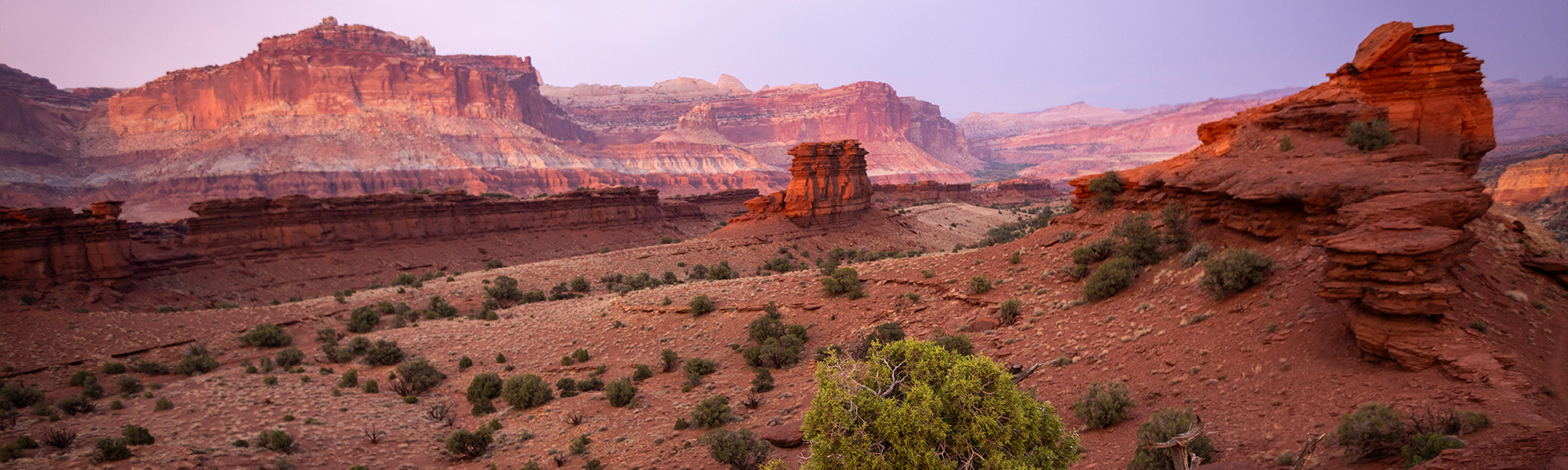
Shifted by fault lines and carved by water, Capitol Reef National Park is a stunning and often-overlooked gem of the American Southwest. Anchored by the 100-mile-long Waterpocket Fold, a massive wrinkle in the Earth’s crust eroded over time, the park showcases a surreal tapestry of domes, cliffs, canyons, and natural bridges. Its colorful rock layers and rugged topography are matched by the quiet charm of Fruita, a historic homestead where fruit trees still bloom beneath red rock walls.
Capitol Reef is the most remote of Utah’s “Mighty Five” national parks. But unlike its more crowded siblings, Capitol Reef offers solitude, expansive views, and the freedom to explore both paved and backcountry landscapes. Whether driving the scenic byway, hiking to high overlooks, or picking apples in a pioneer orchard, Capitol Reef rewards every traveler who makes the journey.
The park’s Waterpocket Fold runs north-south creating a nearly impenetrable geographical barrier. UT-Route 24, the only paved road to bisect this spine of rock divides the park into a northern district (Cathedral Valley) and a southern district (Waterpocket Fold). On the western side of the divide, Scenic Drive charts a course south along the Waterpocket Fold for 8 miles before turning to an unpaved dirt road and turning west and exiting the park. These two roads are the most accessible and offer the best forays into the park for all vehicles. Other dirt roads allow backcountry access to remote areas, but require high-clearance 4WD vehicles. The park’s only visitor center and only front-country campground are located at the junction of these two roads in the historic Fruita Homestead, creating a hub of activity for the park.

Must-see highlights in Capitol Reef National Park
1
Grand Wash Trail—This easy 2.5-mile point-to-point trail is an excellent introduction to the wonders of the Waterpocket Fold. Following a dry creek bed, the Grand Wash Trail weaves through a wide slot canyon revealing layers of geology and dramatic lightplay. This trail is best hiked in the morning or evening as temperatures in the summer can reach 100ºF in midday.
2
Cassidy Arch—A moderately strenuous 3.4-mile round-trip hike leads visitors to a dramatic arch perched high above Grand Wash. Accessed either by Scenic Drive or Grand Wash Trail, the path climbs steadily, offering views of Capitol Dome and the slickrock wilderness. The stability of the rock allows visitors to walk across the arch, a rare opportunity among national parks. Consider visiting at sunrise for incredible golden hour views of the arch.
3
Hickman Bridge—This short and popular 2-mile round-trip hike leads to Hickman Bridge, another spectacular rock arch formation spanning 133 feet. Along the way, visitors are treated to sweeping views of the Fremont River canyon. This hike is great for families and photographers. Because it is short and tucked away, this route is your best option for afternoon heat.
4
Rim Overlook—Sharing the trailhead with the Hickman Bridge Trail, Rim Overlook Trail climbs 2.3 miles to a viewpoint overlooking Fruita and the dramatic cliffs of the Waterpocket Fold. Beyond Hickman Bridge, this trail requires some basic route-finding skills, following cairns across large rocky expanses. However, if you stick to the rim it is hard to get lost.
5
Fruita Historic District—Nestled in the Fremont River valley, Fruita is the cultural heart of the park. Here visitors find restored buildings, working orchards (free fruit picking in season), shady picnic spots, and the charming Gifford Homestead, known for its homemade pies and preserves (open seasonally March–October).
6
*Bonus: Cathedral Valley—For those with an adventurous spirit and a high-clearance 4WD vehicle, Cathedral Valley is an iconic location worth visiting. Temple of the Sun and Temple of the Moon, two large fins of rock, catch the sun glowing orange at sunrise and sunset, often depicted in Capitol Reef photography. To reach these landmarks, drive east out of the park on UT-24 and follow Cathedral Road from Caineville over sandy washes and rough rocky terrain. After 16 miles (about 45 minutes), turn west on Temple of the Moon Road and arrive at the destination.
Best time to visit Capitol Reef National Park
Capitol Reef is open year-round, but most due to temperature is best explored in spring and fall. Summers in Utah’s desert are hot and winters are generally freezing, making spring and fall ideal windows for hiking, biking, and camping.
- Spring (March to May): Spring’s ideal temperatures (60–80°F) attract many visitors making spring the busy season. Blooming wildflowers and orchard blossoms in Fruita draw photographers and day visitors. However, water levels in slot canyons may still be high, and flash floods are most probably in April and May. Check weather forecasts at the visitor center before venturing out into canyon waterways.
- Summer (June to August): Summer is hot (often 90–100°F). But mornings are typically pleasant especially in June. With fewer crowds, summer is best for hikes to popular landmarks such as Cassidy Arch or Temple of the Sun. Stay hydrated and avoid exposed hikes in mid-day heat. The historic orchards ripen in July and August. Visitors are encouraged to pick and eat the fruit. Any fruit taken out of the orchard must be weighed and purchased.
- Fall (September to October): September continues the harvest season for peaches, pears, and apples. Cooler weather (50–75°F) and fewer crowds make autumn an excellent time to visit. Fall colors line the Fremont River around late-September and early October. The cool crisp air provides perfect conditions for stargazing and photography.
- Winter (November to April): Though a desert, Capitol Reef receives an average of 12–`18 inches of snow every year, mostly between December and February. Lower elevation trails and roads may be icy, but generally stay open and melt within a day. Daytime highs range from 30–50°F, with freezing nights. The stunning contrast of white snow and red rock alone makes Capitol Reef worth a winter visit.
How long should I visit Capitol Reef National Park?
A 2–3 day visit is ideal. Allow one day to explore the Scenic Drive and Fruita area. And add a second day for hikes like Grand Wash Trail or Rim Overlook Trail. A third day allows time to explore the Cathedral Valley or Waterpocket Fold backroads with high-clearance vehicles.
Getting to Capitol Reef National Park
As Utah’s most remote park, Capitol Reef takes some effort to reach. If flying from afar, Grand Junction Regional Airport (GJT), the nearest major airport, is 190 miles away in Colorado. Alternative (and often cheaper) options include Salt Lake City International Airport (SLC) roughly 225 miles away and St. George Regional Airport (SGU) at 210 miles away.
The most direct route by car is UT-Route 24 via Interstate-70, approached from either east or west. If arriving from the south (from Bryce Canyon Nation Park), UT-Route 12 is a scenic and path to Capitol Reef. Many travelers choose to visit Capitol Reef as part of a road trip from Zion to Arches, hitting all five of Utah’s national parks.
Where to stay in Capitol Reef National Park
Lodging—Neither Fruita nor Capitol Reef National Park offer any hotel-style accommodations. The nearby town of Torrey is the best bet for hotels and lodging.
Campground—Capitol Reef hosts one front-country campground in the Fruita Historic District and two primitive backcountry campgrounds, one in Cathedral Valley and the other in the Strike Valley of the Waterpocket Fold. Fruita Campground is well-developed with potable water and flushing restrooms.
- Fruita Campground—71 sites (RV and tent), open year-round
When should I book my trip to Capitol Reef National Park?
Even though Capitol Reef National Park is not the busiest park in Utah, it still draws crowds, especially in the spring and fall seasons. If visiting March–May or September–October, consider booking 3–6 months in advance. Fruita Campground books up quickly during this time and on weekends and holidays through out the summer. Weekdays in the summer are usually available less than 1 month in advance.
Lodging in the neighboring town of Torrey can also fill up fast during spring and fall so plan to reserve a room 3–6 months prior to visiting just to be safe.
How much should I budget for Capitol Reef National Park?
A 2–3 day trip to Capitol Reef booked 1 month in advance can cost roughly $500 depending on your required needs. Here is a range of what to expect:
| Roundtrip Airfare to Salt Lake City | $180–$350 |
| Car Rental | $50–90/day |
| Campsite | $25/night |
| Meals | $15–$25/meal |
| Entrance Fee | $20/vehicle |
Packing list for Capitol Reef National Park
Each park requires different gear for its unique characteristics. For Capitol Reef National Park, we wouldn’t want to be caught without hiking shoes, a water bottle, a hat, and sunglasses.
Want to learn more? Check out my helpful trip report for a peek into my visit to Capitol Reef.
For more detailed information on Capitol Reef National Park, visit the official park website.

Looking for more?
To view more photos of this park and the rest of America’s 63 national parks, check out my Park Portraits project.