Est. 2020 | West Virginia | 72,808 acres
Carving through the Appalachian Mountains of West Virginia, New River Gorge National Park protects one of the oldest rivers on the continent and one of the newest additions to America’s National Park System. Here, the New River rushes northward through a canyon of sandstone cliffs, hemlock forests, and cascading streams, offering a powerful mix of natural beauty and Appalachian heritage.
Renowned for its whitewater rapids, world-class rock climbing, and the graceful steel span of the New River Gorge Bridge, the park embodies both wild adventure and quiet mountain charm. Whether you come to paddle roaring rapids, hike lush ridgelines, or watch fog drift over forested valleys at sunrise, New River Gorge captures the enduring spirit of the wild East.
Much like Cuyahoga Valley National Park, this river and park thread through well-developed rural land, spanning two major highways and touching countless mountain communities. These two highway crossings act as the hubs of the park. Canyon Rim Visitor Center at Highway 19 overlooks the famous New River Gorge Bridge while the Sandstone Visitor Center services Sandstone Falls at Interstate 64. From here, various roads protrude into the park up and down the river offering many chances to escape into the quiet backcountry of West Virginia.

Must-see highlights in New River Gorge National Park
1
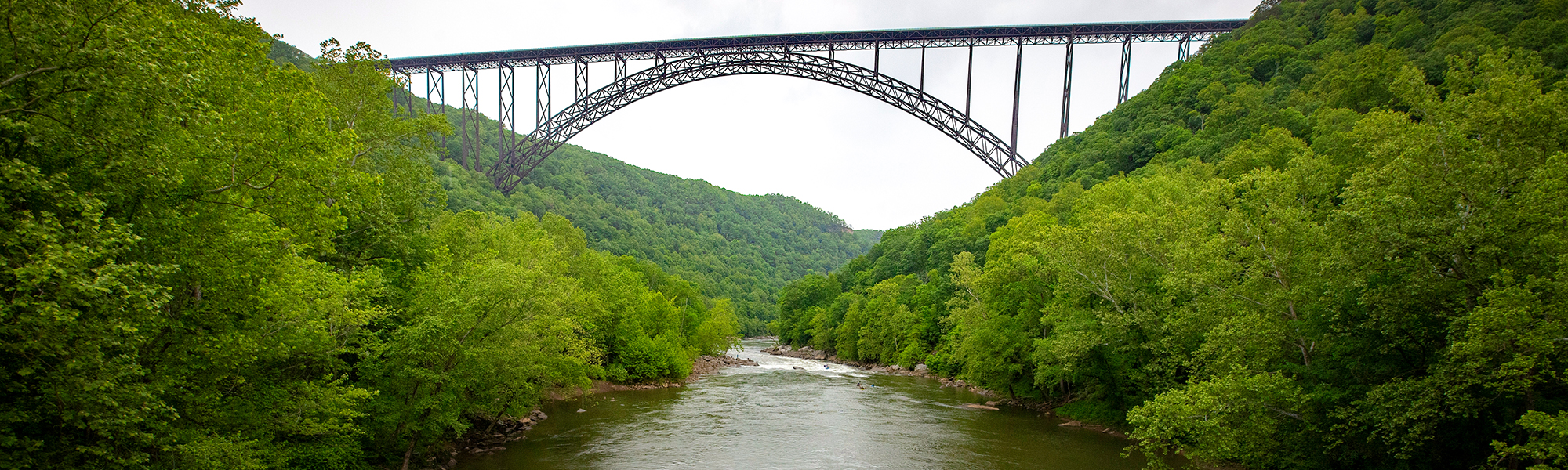
New River Gorge Bridge—The New River Gorge Bridge is the crown jewel of New River Gorge National Park. Towering 800 feet above the canyon floor and spanning 3000 feet rim to rim, this bridge is an engineering feat earning the title of the longest single-arch steel bridge in the hemisphere. Behold its majesty from one of the many nearby overlooks or schedule a Bridge Walk tour underneath the pavement for an unforgettable thrill. Every October, Bridge Day celebrates the structure with BASE jumping and rappelling events.

2
Endless Wall Trail—A park favorite, this 3.2-mile loop traces the rim of the gorge along towering sandstone cliffs giving the trail its name. Overlooks like Diamond Point offer breathtaking views of the river far below and are especially magical at sunrise or sunset.

3
Long Point Trail—This 3-mile round-trip hike leads to one of the park’s most photographed viewpoints—Long Point Overlook—where the New River Gorge Bridge stands framed by ridges of emerald forest and sky.
4
Sandstone Falls—The largest waterfall on the New River, Sandstone Falls stretches nearly 1,500 feet across, with water cascading over a series of rocky ledges. A boardwalk and short trail offer easy access and excellent photo opportunities.
5
Thurmond Historic District—For the more academic visitor, Thurmond offers a peek into a once bustling coal town along the Chesapeake & Ohio Railway. Packed with history, Thurmond now stands nearly silent—its preserved buildings a glimpse into the region’s industrial past. Accessible by car or train, it tells the story of the coal boom that helped shape Appalachia.
Best time to visit New River Gorge National Park
Generally, April to October is the best time to visit, though July and August see the most crowds, heat and rain. Late May and early October are great for foliage, mild temperatures and low crowds.
- Spring (April to June): With cool mornings, wildflowers in bloom, and roaring rapids from snowmelt, spring is a prime season for rafting and hiking the gorge. Daytime temperatures range from 50–70ºF
- Summer (July to August): Summers heat up considerably. Warm and humid, with lush green forests and plenty of swimming and paddling opportunities, July and August reach peak visitation levels as these months are popular for family trips and climbing enthusiasts. July is known to be the hottest and wettest month of the year (60–80ºF).
- Fall (September to October): Mild temperatures, vivid fall foliage peaking in October, and ideal hiking conditions make autumn the park’s most spectacular season. Bridge Day (third Saturday in October) draws thousands of visitors as the highway is closed to vehicles and only open to pedestrians with its annual BASE jumping and rapeling spectacles.
- Winter (November to March): Winter is bare and quiet. Comprised mainly of deciduous trees, the gorge is barren and brown, but trails offer a peaceful atmosphere for photography and solitude. Temperatures hover around 20–50ºF with occasional snow dusting the cliffs. As an added perk, wildlife viewing is excellent with lower crowd sizes in these winter months.
How long should I visit New River Gorge National Park?
A 2 day visit is ample time to visit main attractions like the Endless Wall Trail, Sandstone Falls, Thurmond, and the scenic drives. Because the river system is long and winding, driving between attractions can easily take an hour or more, so plan ahead and group nearby activities together to avoid over-driving.
Getting to New River Gorge National Park
Flying into New River Gorge is a bit tricky as it stands 4 hours equidistant from many of the major airports in the area (Louisville, Cincinnati, Columbus, Pittsburgh, Washington D.C. and Charlotte). West Virginia International Yeager Airport (CRW) in Charleston, West Virginia, is the closest airport at 1 hour away, but can be pricey depending on airline and hometown airport.
Once in the area, simply follow road signs for Fayetteville and Highway 19 to Canyon Rim Visitor Center, or Interstate 64 to Sandstone and the Sandstone Visitor Center.
Where to stay in New River Gorge National Park
Lodging—While there are no lodging accommodations inside the park, nearby towns have plenty to offer. Lodges can be found in Hawks Nest State Park and Pipestem Resort State Park, while cabins can be reserved in Babcock State Park, Bluestone State Park, and Pipestem Resort State Park.
Campground—The park offers 9 free primitive campgrounds along the river—all first-come, first-served. These sites have no running water or hookups. For developed front-country campgrounds, visit nearby state parks.
- Stone Cliff Campground—7 sites (tent only), open year-round
- Army Camp Campground—11 sites (RV and tent), open year-round
- Grandview Sandbar Campground—16 sites (RV and tent), open year-round
- Glade Creek Campground—11 sites (RV and tent), open year-round
- War Ridge/Backus Mountain Campground—8 sites (RV and tent), open year-round
- Brooklyn Campground—5 sites (tent only), open year-round
- Thayer Campground—4 sites (tent only), open year-round
- Meadow Creek Campground—26 sites (tent only), open year-round
- Gauley Tailwaters Campground—18 sites (RV and tent), open year-round
When should I book my trip to New River Gorge National Park?
New River Gorge National Park is not a highly competitive park to visit, so booking 1–2 weeks in advance is possible, though 1–2 months is ideal. Spring, summer and fall (April–October) is peak season, so consider booking rafting trips, bridge walk tours, guided climbs, and lodging several months ahead. As with all parks, weekends and holidays are busiest; for fewer crowds, visit midweek or in early fall. Bridge Day weekend (third Saturday in October) draws large crowds—reserve this weekend as early as possible.
How much should I budget for New River Gorge National Park?
A 2 day trip to New River Gorge National Park booked 2 months in advance can cost roughly $500–$700 depending on your required needs. Here is a range of what to expect:
| Roundtrip Airfare to West Virginia International Yeager Airport (CRW) | $250–$500 |
| Lodging | $120–$250/night |
| Campsite | FREE |
| Car Rental | $40–$70/day |
| Rafting Day Trip | $80–$150/person |
| Bridge Walk Tour | $80/person |
| Meals | $15–$20/meal |
| Entrance Fee | FREE |
Packing list for New River Gorge National Park
Each park requires different gear for its unique characteristics. For New River Gorge National Park, we wouldn’t want to be caught without hiking shoes, rain jacket, water bottle, hat, binoculars, and sunglasses.
Want to learn more? Check out my detailed trip report for a peek into my trip to New River Gorge.
For more detailed information on New River Gorge National Park, visit the official park website.

Looking for more?
To view more photos of this park and the rest of America’s 63 national parks, check out my Park Portraits project.