Est. 2013 | California| 26,685 acres
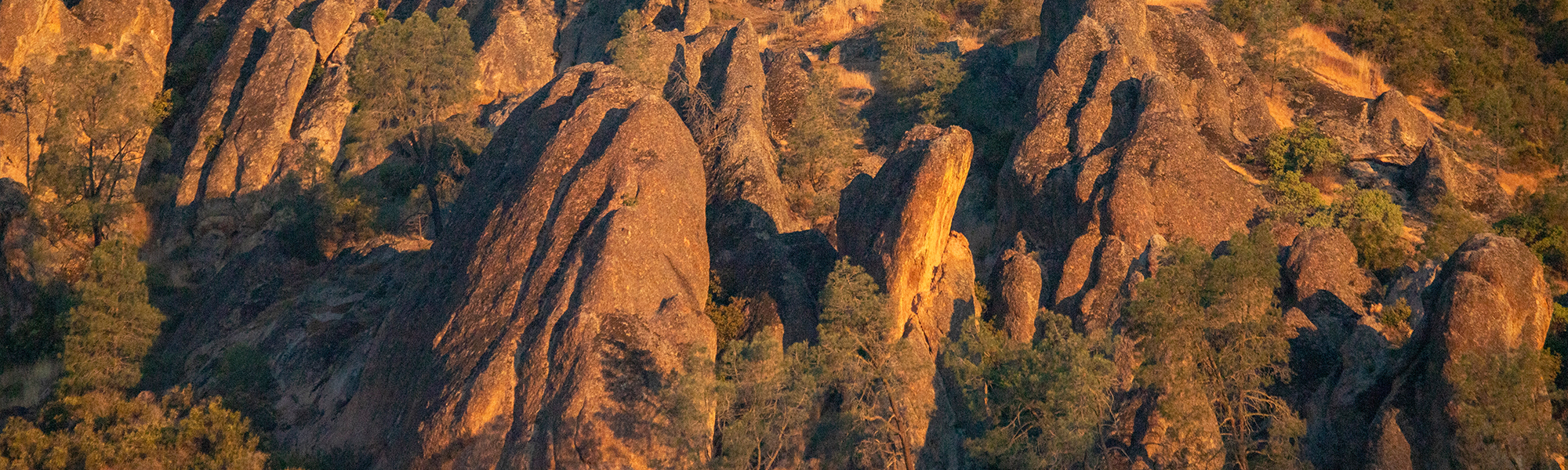
Nestled near the San Andreas Fault in California lies an outcropping of volcanic rock thrust up by enormous tectonic activity long ago. Today, visitors hike through chaparral, oak woodlands, and creekside canyons to witness these massive pinnacles of rock firsthand and perhaps by chance spot the elusive and endangered California Condor circling high above. A hiking paradise for all ages, Pinnacles National Park is bent on offering the outgoing adventurer a taste of California’s wild coastal mountains.
Spanning the High Peaks of the central coast range, there are essentially two regions to the park: east and west. Though abundant trail options traverse the range, there is no park road connecting the two regions. A long 1.5-hour car ride through King City is the shortest distance from side to side. While the western side has simple amenities and is generally quieter, the eastern region is more popular and equipped for visitors with the park’s only visitor center, store and campground accessing the park’s main attractions.

Must-see highlights in Pinnacles National Park
1
High Peaks Trail—As the park’s signature hike, High Peaks Trail takes visitors on an exhilarating 5.5-mile loop climbing steep switchbacks and handrail-assisted ladders to panoramic views of the surrounding valleys among the park’s iconic pinnacle rocks. Look for California condors gliding on thermals near the summit and if you’re lucky you may just run into some perched on the upper portions of the trail.

2
Bear Gulch Cave Trail—On this trail, hikers are treated to a labyrinth of narrow passageways formed by massive fallen boulders. Visitors can explore this cool, dark talus cave by flashlight, often alongside roosting bats and dripping springs. The trail continues to the serene Bear Gulch Reservoir before circling back up with the Rim Trail. Note: the cave fully closes May–July to protect seasonal bat behavior. Check with park staff before attempting this trail.

3
Balconies Cliffs Trail and Cave Trail Loop—Located near the west entrance, this shorter 2.4-mile loop explores another talus cave system and a series of jagged rock formations perfect for photography and exploration. Quieter and less crowded, this lollipop loop burrows through a short but dark cave system and returns over high cliff passes with stunning panoramic views. Though not exposed to high fall risk, this trail is strenuous with substantial elevation gain. Note: Because the Balconies Cave Trail is dark, I recommend carrying a headlamp and noting closure times when hiking the cave portion of this trail.

4
Condor Gulch Trail—For an eastern view of the High Peaks, Condor Gulch Trail offers a convenient viewpoint one mile in to watch the sun rise on the rock pinnacles. Continue past this viewpoint for another half mile to connect to the High Peaks Trail. Early morning walks on this trail may elicit wildlife such as rabbit, quail and squirrel.
5
Chaparral Parking Area—Though not exciting in nature, this parking area offers some of the best sunset viewing in the park. Facing west, the High Peaks catch the last golden light of day before the sun slips below the horizon. Afterward, linger a little longer and watch stars pop out over the pinnacles.

Best time to visit Pinnacles National Park
Pinnacles National Park’s Mediterranean climate brings mild, wet winters and hot, dry summers. The shoulder seasons are often the most popular converging on good weather and cooler temperatures.
- Spring (March to May): Spring is the most popular season for visitation. Wildflowers carpet the hills, temperatures range from 60–80°F, and wildlife is active. Ideal for hiking and photography, there’s not much to complain about in the spring . . . except for the crowds. Expect full campgrounds and long lines at the entrance stations.
- Summer (June to August): Though appearing high in altitude, summer days are hot and dry, with highs often over 95°F. Early mornings and evenings are best for hiking, while caves provide refuge from the heat. Campfires and grills are usually prohibited during summer months as wildfire danger is sharply elevated. Bear Gulch Cave is typically closed to hikers during summer as bat populations nest in the cool rocks.
- Fall (September to November): Fall, the other shoulder season is an excellent time to visit. Cooler weather and fewer crowds make autumn a great time for longer hikes and better chance at condor viewing. With oak trees everywhere, late-October and November is the best time for fall color foliage.
- Winter (December to February): Though possible, snow is extremely rare in Pinnacles National Park. A dusting at most may linger into the mid-morning hours before melting away. Most precipitation falls as rain December through February. With mild days (50s–60s°F) and crisp nights, winter is a great option for visiting Pinnacles; the occasional rainstorm brings vibrant green hillsides.
How long should I visit Pinnacles National Park?
In comparison to more famous national parks, Pinnacles National Park is not large. Many of its trails can be completed in a couple hours or half-day. That’s why a 2-day visit is ample time to hit the highlights, allowing time to explore both talus caves, hike the High Peaks, and enjoy sunrise or sunset among the spires. 3-day trip gives you the chance to experience both park entrances and hike some of the less popular trails.
Getting to Pinnacles National Park
California is not known for it remote destinations, but Pinnacles breaks the mold. The Monterrey Regional Airport (MRY) on the coast is the nearest airport at 50 miles from the western entrance. However, 80 miles to the north is San Jose Mineta International Airport (SJC), an often cheaper and more direct airport to the easter side attractions.
Once in California, either follow Highway 101 along the coast to Soledad and turn east on State Route 146 to reach the West Entrance or locate State Route 25 on the other side of the mountains and turn west onto State Route 146 to access the East Entrance. Though named the same, State Route 146 on the east side of the park does not connect to State Route 146 on the west side.
Where to stay in Pinnacles National Park
Lodging—There are no lodge accommodations inside the park. Closest overnight stays are available in Hollister, Soledad, and King City, ranging from motels to small inns and farm stays.
Campground—Camping is the only solution to spending the night in the park. Located on the eastern side, Pinnacles Campground—the park’s only campground—books often and early, especially during the spring and fall. There are no first come, first served campsites available.
- Pinnacles Campground—134 sites (RV and tent), open year-round
When should I book my trip to Pinnacles National Park?
Visiting Pinnacles is relatively easy. With plenty of airport and rental car options available, campsites are the most competitive factor. These sites sell out quickly but open up for reservations 6 months in advance. If you are unable to secure a campsite, hotels in Hollister, Soledad and King City are convenient backup options.
How much should I budget for Pinnacles National Park?
A 2 day trip to Pinnacles National Park booked 6 months in advance can cost roughly $500–$700 depending on your required needs. Here is a range of what to expect:
| Roundtrip Airfare to San Jose Mineta International Airport (SJC) | $1,600–$2,200 |
| Lodging | $100–$250/night |
| Campsite | $44–$62/night |
| Car Rental | $40–$70/day |
| Meals | $15–$20/meal |
| Entrance Fee | $30/vehicle |
Packing list for Pinnacles National Park
Each park requires different gear for its unique characteristics. For Pinnacles National Park, we wouldn’t want to be caught without hiking shoes, headlamp or flashlight, water bottle, hat, binoculars, and sunglasses.
Want to learn more? Check out my detailed trip report for a peek into my trip to Pinnacles.
For more detailed information on Pinnacles National Park, visit the official park website.

Looking for more?
To view more photos of this park and the rest of America’s 63 national parks, check out my Park Portraits project.