Est. 1988 | American Samoa | 8,257 acres
Officially dubbed the National Park of American Samoa, this island paradise is the only U.S. national park south of the equator. Located over 2,500 miles southwest of Hawai’i near New Zealand, the park rests along the islands of Tutuila, Ofu, and Ta‘u, protecting lush tropical rainforests, coral reefs, volcanic terrain, and villages that preserve the living culture of the Samoan people.
Unlike most U.S. parks, American Samoa National Park is as much about cultural heritage as it is about natural beauty. Visitors are welcomed into villages that continue to practice fa‘ a Samoa, or “the Samoan way,” while exploring some of the most pristine marine and rainforest ecosystems in the South Pacific.
Rugged and undeveloped, American Samoa only boasts a handful of trails and beaches across its small acreage. On the main island of Tutuila, Route 001 traverses the southern coast leading visitors through the capitol city of Pago Pago (pronounced “pahng-oh pahng-oh”) to the doorstep of the park along Route 006. From here, drive up and over a mountain pass to the north side of the park near the village of Vatia. Other than a remote ranger station on Ofu, the park’s visitor center in Pago Pago alone services the various cultural sites, historic attractions, trails, and beaches.

A note on American Samoa: While it is a U.S. territory, American Samoa is an under-developed island. Do not expect resort style accommodations or amenities like Hawai’i or the Virgin Islands. Samoan culture is quite friendly and safe but the quality of life on the island is more reminiscent of a third world country than a vacation destination. As guests to the island, honor and respect Samoan culture by dressing modestly and asking permission to visit beaches or take pictures. Certain destinations in the park are pristine and gorgeous but some villages have a fair amount of litter and stray dogs in the streets. Do not approach dogs as they are known to be aggressive and territorial. Be aware of these island limitations in order to set expectations accordingly and ultimately have a great time in American Samoa National Park. Additionally, though rare, American Samoa has had outbreaks of dengue, Zika, and chikungunya so be cautious regarding mosquito bites. Carry bug spray and avoid stagnant water.
Must-see highlights in American Samoa National Park
1
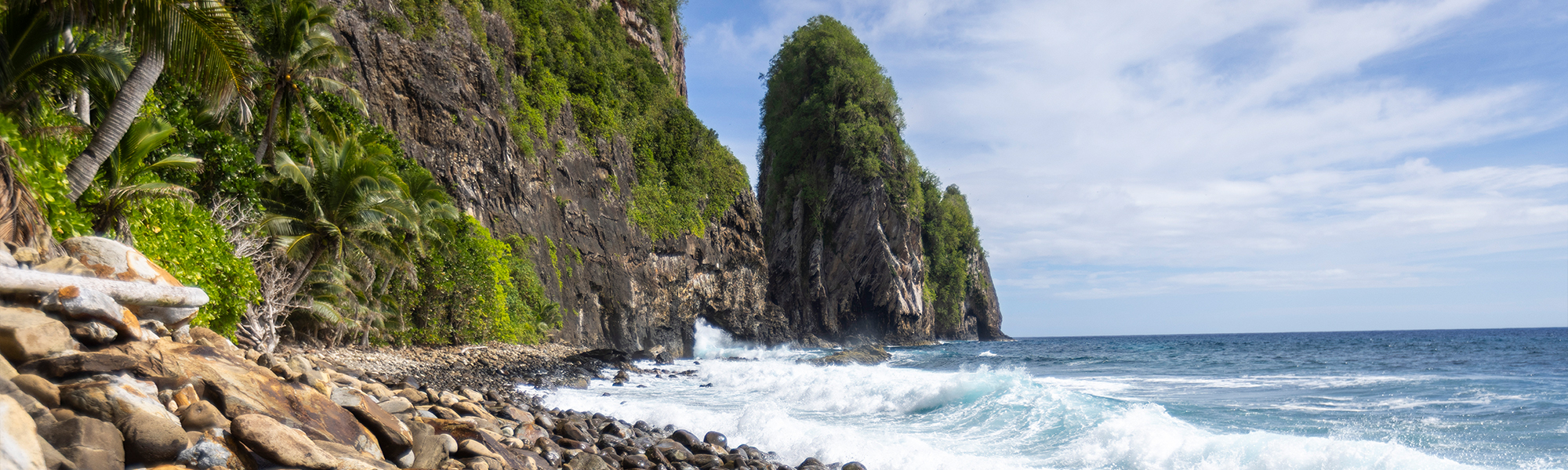
Pola Island Trail—This short 0.1 mile trail opens up to a rocky beach at the foot of American Samoa’s impressive Pola Island, perhaps the most photographed feature of the park. Thundering waves crash against Pola’s towering rock walls layered in vegetation. To visit Pola Island Trail drive to the end of Route 006 past the village of Vatia. Either park here or continue on to a dirt road. At the end of the road are several informational signs that signify the start of the trail down to the beach.

2
Lower Sauma Ridge Trail—Located near the entrance of the park along Route 006, this is one of the park’s best views. Hike 0.25 miles down a steep rocky grade for panoramic views of Vatia Bay and Pola Island. During low tide this trail also offers access to ocean tide pools of tropical fish, coral, and invertebrates. This is an excellent spot for sunrise on or sunset over Pola Island.

3
Tuafanua Trail—This 2-mile adventurous trail near Pola Island transports hikers through dense jungle, up and over a ridge to view the western face of Pola Island. Be prepared for muddy slick footing and the occasional rope ladder to climb some sections of this trail. The parking lot for this trail is near the end of Route 006 just before it turns to dirt. Look for a small sign on the left labeled “Tuafanua Trail Parking”
in a wide grassy lot. Park here and follow the edge of the brush back to the left behind a large building. Follow what looks to be an overgrown unmaintained trail. Eventually this turns into a definitive trail that switchbacks up and over the pass.

4
Mount ‘Alava Trail—As the park’s longest trail, Mount ‘Alava trail skirts 3.5 miles along the island’s backbone culminating in expansive views over Pago Pago Harbor to the south and American Samoa National Park to the north from the park’s tallest point, Mount ‘Alava. This trail is wide and easy to follow but often muddy and slippery for days after rain. Watch for downed trees and large mud puddles. Near the end climb a rickety set of stairs at your own risk to reach the official summit of the mountain.

5
Ofu Beach—On remote Ofu Island, this white-sand beach is considered one of the most beautiful in the world. Its coral reef is teeming with colorful fish, sea turtles, and giant clams below the island’s emerald forests and jagged volcanic peaks. Though it is a challenge to reach, it’s reward is great.
Best time to visit American Samoa National Park
While it is generally hot and humid all year long, there are two main seasons in American Samoa National Park: wet and dry. And because the park is below the equator the seasons are inverted.
- Summer (October to May): Summer officially marks the wet season and an influx of tropical storms. The average high is 86ºF with nearly 12 inches of rain per month. December is usually the wettest month of the year.
- Winter (June to September): Winter therefore is the dry season, though dry is a relative term on such a rainy island. With highs not much cooler than summer (82ºF) the average monthly rainfall is still 8 inches. September tends to be the driest month of the year, but again that is relative to the region.
While weather forecasts can be helpful they are not always accurate. As a mountain in the middle of the ocean, the island makes its own weather. Prevailing winds across the sea push moisture up into the higher reaches of the mountains where it condenses and turns to rain which the forecast usually predicts. However, out on the coast the ocean winds typically keep the clouds at bay. While rain is possible in the heart of the island the coast could be completely sunny.
How long should I visit American Samoa National Park?
A 2–3 day visit on the island is sufficient to experience the bulk of the park’s highlights like Pola Island Trail, Lower Sauma Ridge Trail, and Mount ‘Alava Trail on Tutuila. For those who want to visit Ofu and Ta’u, reserve at least 2 extra days as arrangements to these remote islands can be difficult. Because the rain is unpredictable, it never hurts to plan some margin for your trip. Mount ‘Alava itself can take a full day to hike and driving the island from end to end can easily take 4 hours with slow roadway speeds (20–25mph island-wide).
Getting to American Samoa National Park
By distance, American Samoa is the furthest park from the mainland United States, making it extremely laborious to visit. Expect to spend an additional 1–2 days traveling to the island and 1–2 days back home. Most visitors arrive in Pago Pago International Airport (PPG) from Honolulu, Hawai’i. Hawai’ian Airlines flies to and from Pago Pago three times a week, typically Monday, Tuesday, and Thursday. American citizens and nationals can travel to American Samoa freely and without a visa. However, a passport valid for at least 6 months beyond the intended stay is necessary for all travelers.
Once on the island, travelers can rent a car through Avis or Tradewinds Hotel. Other options exist on the island, but it is best to do plenty of research as not all rental cars are in good shape. From the airport, follow, Route 001 east along the coast and turn north towards the village of Afono on Route 006. This road will lead directly to the trails and attractions in the park near Vatia.
Where to stay in American Samoa National Park
There are currently no campgrounds or lodges within the national park boundaries, and backcountry camping is strictly prohibited. Therefore, overnight accommodations are limited to hotels and inns. The park once hosted a homestay program where visitors could lodge with local families and learn Samoan culture. However, since covid, that program has been indefinitely suspended.
The best place to stay is Tradewinds Hotel. It is reasonably priced, clean and modern. Tradewinds offers a modest continental breakfast, complimentary shuttle to/from the airport, and optional rental cars for an additional fee during a stay. The one downside, is it’s proximity to the park. It is located near the airport in the village of Tafuna. On the congested, winding streets, it can take at least 40 minutes to reach the park boundaries.
When should I book my trip to American Samoa National Park?
Though it is one of the most beautiful parks, American Samoa is not a top national park destination making last minute bookings possible. The dry season (June to September) is considered the busy season for its stable weather, cruise schedules, and calmer seas. Shoulder season (September) is typically the sweet spot for favorable conditions and lower crowds. Consider booking a flight and hotel at least 6 months in advance. If booking through Tradewinds Hotel, ask for a digital receipt to confirm the reservation.
How much should I budget for American Samoa National Park?
A 2–3 day trip to American Samoa National Park booked 6 months in advance can cost roughly $2,000–$2,500 depending on your required needs. To keep costs down, consider traveling with a group of family or friends to share the costs of lodging, water taxis, and rental cars. Here is a range of what to expect:
| Roundtrip Airfare to Pago Pago International Airport (PPG) | $1,600–$2,200 |
| Lodging | $150–$300/night |
| Car Rental | $110–$150/day |
| Meals | $15–$25/meal |
| Beach Fees | $5–$10/person |
| Entrance Fee | FREE |
Packing list for American Samoa National Park
Each park requires different gear for its unique characteristics. For American Samoa National Park, we wouldn’t want to be caught without snorkel gear, hiking shoes, sandals, water bottle, bug spray, rain coat, a hat, binoculars, and sunglasses.
Want to learn more? Check out my detailed trip report for a peek into my trip to American Samoa.
For more detailed information on American Samoa National Park, visit the official park website.

Looking for more?
To view more photos of this park and the rest of America’s 63 national parks, check out my Park Portraits project.