Est. 1964 | Utah | 337,598 acres
A story of sculpted sandstone cliffs, winding canyons, and the confluence of the Colorado and Green Rivers, Canyonlands National Park embodies the vast, untamed spirit of the American Southwest. Within its enormous expanse lie three distinct districts—Island in the Sky, The Needles, and The Maze—each offering its own unique mixture of isolation, adventure, and dramatic desert landscapes.
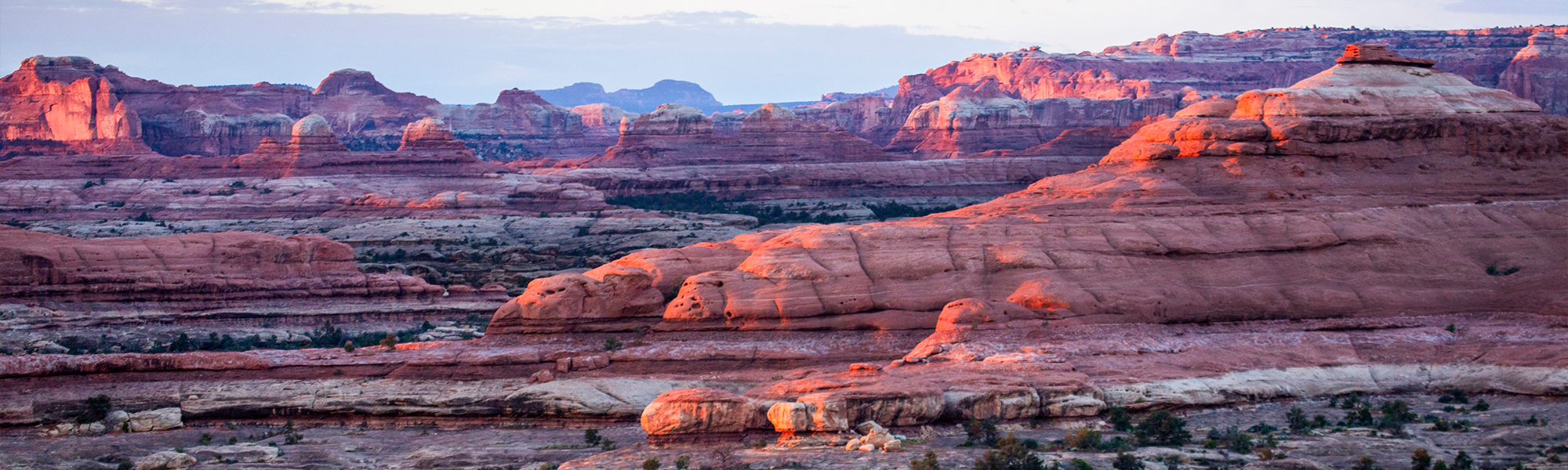
As the most accessible district, Island in the Sky offers the perfect overview of the park—literally and figuratively. With commanding viewpoints just off the roadway, some of the park’s best panoramic vistas are found here. A little further off the beaten path but still accessible to most cars, The Needles district, named for its impressive display of spires and hoodoos, grants the more adventurous with intimate canyon trails and spectacular rock formations not visible from the canyon rim. Yet deeper still and only reached by foot or heavy-duty 4WD vehicles lies The Maze, Canyonlands’ most remote district full of unfrequented trails, slot canyons and plenty of river recreation. Horseshoe Canyon is technically the park’s fourth (and smallest) district known for petroglyphs and canyon wildflowers, but it is rarely visited due to its remote location unattached from the rest of the park in thew west. As the more accessible regions, both Island in the Sky and The Needles districts contain visitor centers, developed campgrounds and front-country trails.
From the towering overlooks of Island in the Sky to the labyrinth of slot canyons in the Maze, Canyonlands is a place that invites exploration and rewards patience. Sunrises ignite the cliffs in shades of crimson, ancient petroglyphs whisper stories from millennia past, and the deep shadows of the canyons shift with the day’s changing light. It is a world carved by water, wind, and time—mysterious, rugged, and yet profoundly beautiful.

Must-see highlights in Canyonlands National Park
1
Mesa Arch (Island in the Sky)—Perhaps the park’s most iconic sight, Mesa Arch sits perched along the canyon rim, framing a sweeping desert vista. At sunrise, its underside glows a fiery orange as the first light spills across the distant La Sal Mountains and the canyon below.

2
Grand View Point Overlook (Island in the Sky)—This overlook provides one of the most expansive vistas in the American Southwest. A short trail skirts the cliff edge, offering panoramic views of a maze of buttes, mesas, and carved canyons stretching endlessly toward the horizon.
3
Shafer Trail Road (Island in the Sky)—Not for the faint of heart, this steep, switchbacking dirt road descends from Island in the Sky to the canyon floor. High-clearance, 4WD vehicles are required, but the experience of slowly dropping through layers of ancient rock is unforgettable. Stop at Shafer Canyon Overlook before descending for one of the park’s most photogenic views.

4
Chesler Park Loop Trail (The Needles)—A spectacular 10–11 mile hike through towering sandstone spires, narrow rock passageways, and wide open desert meadows. This trail showcases the Needles district at its finest—colorful, intricate, and immersive. Explore at sunrise for stunning colors and dramatic shadows.

5
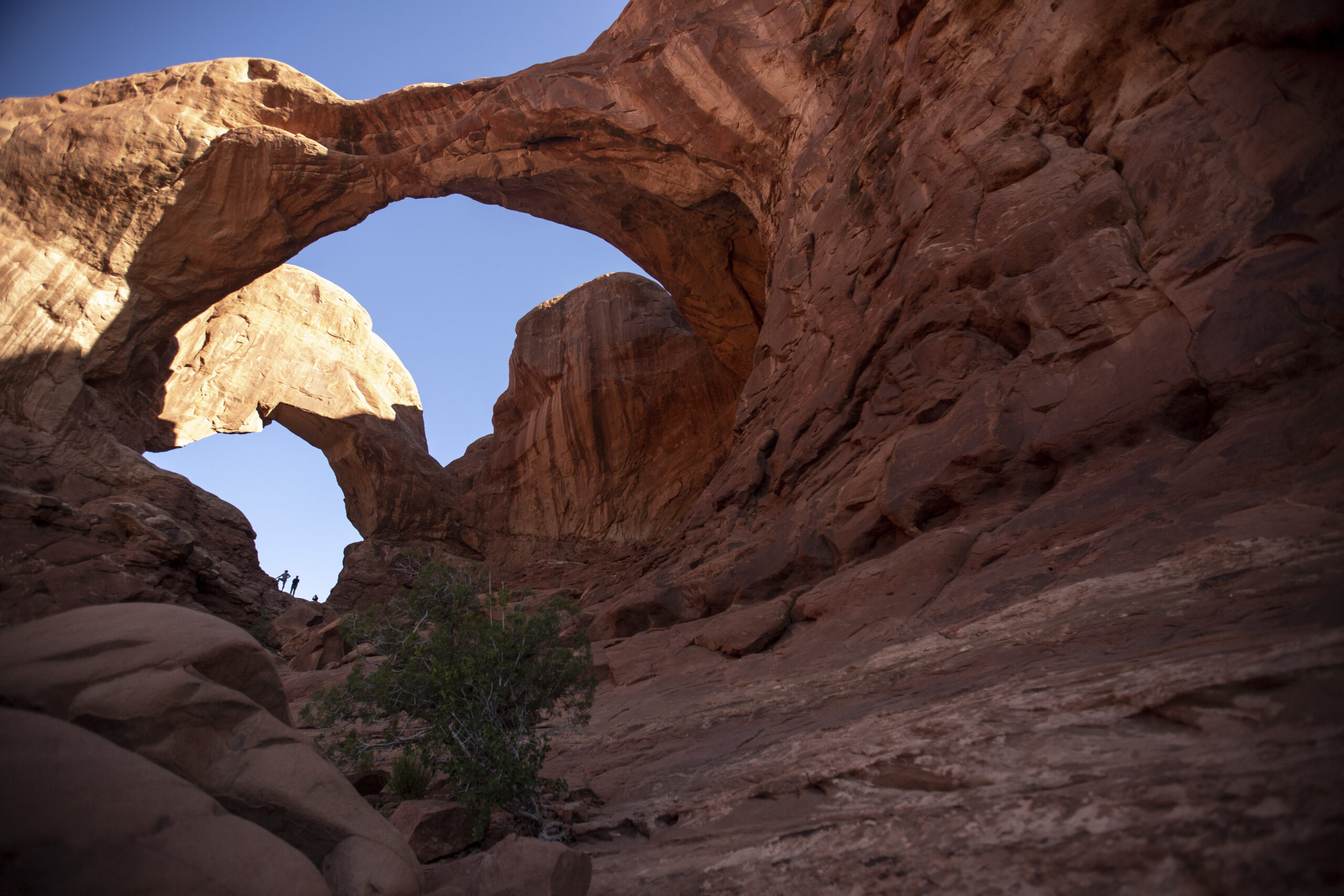
Druid Arch (The Needles)—Druid Arch is one of the signature landmarks of Canyonlands National Park. Tucked deep within Elephant Canyon, Druid Arch rises like a colossal stone gateway, its two towering pillars connected by a high, angular span that resembles the silhouette of a prehistoric monument. The 10–11 mile round-trip hike from Elephant Hill Trailhead winds through a maze of canyons, slickrock ledges, and sandy washes before a steep final ascent—including a ladder and a scramble—leading to the arch’s dramatic viewpoint.
6
*Bonus: Newspaper Rock—Though technically just outside The Needles’ park boundary, this vast rock panel displays hundreds of petroglyphs etched over 2,000 years. It’s one of the best-known ancient rock art sites in the region and worth a stop.

Best time to visit Canyonlands National Park
Spring and fall are typically the best times to visit Canyonlands National Park. Even though these are the busiest seasons (spring more so than fall), the temperatures and weather are prime for hiking the open rocky trails of Utah. Summer brings heat and flash floods and winter brings dry snow.
- Spring (March to May): As one of the most pleasant seasons in Canyonlands, daytime temperatures generally range from the mid-50s to mid-70s°F (13–24°C). Nights remain cool, often dipping into the 30s and 40s°F (1–7°C). Weather is usually mild and dry, and desert wildflowers start to bloom as early as late-March, creating ideal conditions for hiking and sightseeing.
- Summer (June to August): Summer on the other hand is hot and dry, with daytime highs commonly reaching 90–100°F (32–38°C) and sometimes even higher along the canyon floor. Overnight temperatures usually fall into the 60s°F (16–21°C). Clear mornings give way to intense midday heat, and late-summer monsoon storms can bring brief but powerful thunderstorms. Watch the weather carefully as thunderstorms—even miles away—can cause flash floods. Early mornings and evenings are the best times to explore.
- Fall (September to October): Some of the best weather of the year occurs in autumn. Daytime temperatures typically settle in the 60s to 80s°F (16–27°C), while nights cool to the 40s and 50s°F (4–12°C). The air is crisp, skies are usually clear, and the comfortable temperatures make this an excellent season for longer hikes and backpacking trips.
- Winter (November to April): Winter is quiet and cold, with daytime temperatures often in the 30s–50s°F (−1 to 10°C) and nighttime lows frequently dropping into the teens or 20s°F (−9 to −2°C). Snow is possible on the mesa tops, though it usually melts quickly. The low-angle winter light creates stunning photography conditions, and the park feels especially peaceful as visitation is at its lowest.
How long should I visit Canyonlands National Park?
A 2–3 day visit is generally enough time to explore the Island in the Sky district and the highlights of the Needles district. Set aside at least a full day in The Needles to explore longer hikes, slot canyons, and a more immersive backcountry experience. Travelers with five or more days can venture even deeper into the park, adding a visit to the Maze district, a multi-day backpacking route, or a guided river trip along the Colorado or Green River.
Getting to Canyonlands National Park
Canyonlands National Park is most easily accessed from the town of Moab, Utah, along U.S. Highway 191. Island in the Sky is located about 40 minutes from Moab along a paved, well-maintained road. The Needles district lies farther south and takes roughly 1.5 hours to reach from Moab also via a paved well-maintained road. The Maze district however, is significantly more remote and requires at least three hours of travel, including long stretches of unpaved road, before reaching the closest access points. The Maze is best reached from Hanksville and Hans Flat in the west, opposite the park from Moab.
Visitors can fly into several nearby airports. Grand Junction Regional Airport (GJT) in Colorado is about two hours away and provides the closest frequent flights. However, Salt Lake City International Airport (SLC), approximately four hours from the park, is the nearest major hub with extensive airline connections and often affordable pricing.
Where to stay in Canyonlands National Park
Lodging—There are no lodges inside the park. Most visitors stay in Moab, which offers hotels, cabins, and vacation rentals aplenty.
Campground—Canyonlands only has two front-country developed campgrounds available. All other camping must be reserved by permit in the backcountry. Willow Flat Campground is entirely first come, first served.
- Willow Flat (Island in the Sky) Campground—12 sites (RV and tent), open year-round
- The Needles Campground—26 sites (RV and tent), open year-round
When should I book my trip to Canyonlands National Park?
Because winters can be snowy and summers tend to be scorching, most visitors arrive in spring and fall. If you plan to visit during these months, consider booking accommodations 3–6 months ahead. Though take note, summer weekends and holidays are always very popular, and campsites fill quickly. Backcountry permits, especially for The Needles and The Maze, should be reserved as early as possible.
How much should I budget for Canyonlands National Park?
A 2–3 day trip to Canyonlands booked 3 months in advance can cost roughly $500 depending on your required needs. Here is a range of what to expect:
| Roundtrip Airfare to Salt Lake City | $180–$350 |
| Lodging | $150–$300/night |
| Car Rental | $50–90/day |
| Campsite | $15–20/night |
| Meals | $15–$25/meal |
| Entrance Fee | $30/vehicle |
| 4WD Rental | $150–$250/day |
Packing list for Canyonlands National Park
Each park requires different gear for its unique characteristics. For Canyonlands National Park, we wouldn’t want to be caught without hiking shoes, hiking poles, an extra water bottle, light rain jacket, a hat, sunscreen, sunglasses and a headlamp for early morning hikes.
Want to learn more? Check out my helpful trip report for a peek into my visit to Canyonlands.
For more detailed information on Canyonlands National Park, visit the official park website.

Looking for more?
To view more photos of this park and the rest of America’s 63 national parks, check out my ParkQuest project.