Est. 2000 | Ohio | 32,572 acres
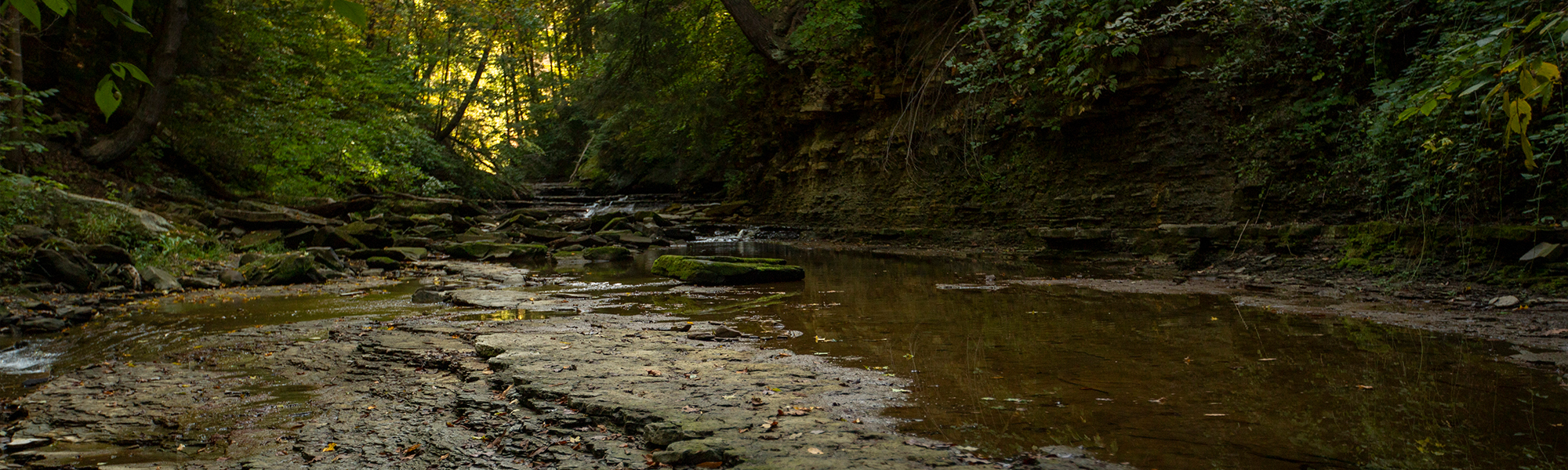
Nestled between the cities of Cleveland and Akron, Cuyahoga Valley National Park preserves a lush, winding river valley filled with forests, wetlands, rolling hills, and historic villages. More pastoral and intimate than many western parks, it offers a quiet beauty shaped by both nature and human history. Waterfalls cascade through deep ravines, towpaths trace the old canal route that once connected the region, and farms and woodlands blend seamlessly into a landscape rich with wildlife and seasonal color.
Whether you’re biking the historic Ohio & Erie Canal Towpath Trail, walking among spring wildflowers, listening to the rush of Brandywine Falls, or riding the Cuyahoga Valley Scenic Railroad, the park provides a refuge of calm and natural beauty at the heart of northeast Ohio.
Much like New River Gorge, this national park follows the Cuyahoga River co-mingling with private lands and allowing for many points of entry all along the river. Most visitors congregate around the Boston Mill Visitor Center. Centrally-located and near the iconic Brandywine Falls, this area is the perfect destination for trails, attractions and information. And though not official visitor centers, the Hunt House in the south and the Canal Exploration Center in the north also act as information hubs for their respective regions of this elongated park.

Must-see highlights in Cuyahoga Valley National Park
1
Brandywine Falls—One of the park’s most iconic features, this 65-foot waterfall near Boston Mill Visitor Center tumbles over layers of sandstone and shale. A series of boardwalk viewpoints offer dramatic perspectives, especially in spring and after a good rain.

2
Ledges Trail—The Ledges Trail is a 2.2-mile loop that winds past towering sandstone cliffs, under mossy rock formations, and through shaded forests. Found near the end of the loop, the trail’s famous stone staircase is one of the most iconic symbols of Cuyahoga Valley and the region.

3
Beaver Marsh—Here you will find a restored forest wetland teeming with wildlife such as herons, otters, turtles, chorus frogs, and dragonflies just a short walk from the parking lot. The boardwalk overlook is especially lovely at sunrise and sunset. If lucky, mist can settle on the marsh overnight creating epic golden hour scenes at sunrise.

4
Everett Covered Bridge—The Everett Covered Bridge is one of the most charming historic landmarks in Cuyahoga Valley National Park. Spanning Furnace Run near the village of Everett, it is the last remaining covered bridge in Summit County and a faithful reconstruction of the original 19th-century structure that once served local farmers and travelers along the valley’s rural roads.
5
Towpath Trail—Stretching more than 20 miles through the park, this flat, scenic trail follows the historic canal route along the length of the Cuyahoga River. Perfect for biking, walking, running, or birdwatching, it connects many of the park’s major highlights.
Best time to visit Cuyahoga Valley National Park
With brilliant foliage and cool temperatures, fall is often the busiest season for Cuyahoga Valley National Park. Spring is the second-most popular season followed closely by summer as visitation remains steady, but more dispersed. Winter, to no surprise, is the least busiest season as the humidity can bring snow, ice, and chilling temperatures.
- Spring (April to June): Spring brings blooming wildflowers, increased waterfalls, and mild temperatures typically ranging from the 50s to 70s°F (10–24°C). Rain is common, which helps fuel the park’s waterfalls and lush greenery. Trees begin filling out in early-May.
- Summer (July to August): Ohio summers are warm and humid, with highs in the upper 70s to mid-80s°F (25–30°C). Long days and a thick forest canopy make this an excellent season for running, hiking and biking. But make sure to wake up early for wildlife watching as animals are more active in the cool of the day.
- Fall (September to October): Autumn is the park’s most spectacular season. Temperatures cool down to the 50s–70s°F (10–24°C), and vibrant fall foliage blankets the valley. October is the best month for autumn color, often peaking near the second and third weeks.
- Winter (November to March): The winter season is quiet and often snowy next to the Lake Erie. Highs usually sit in the 30s–40s°F (0–7°C), and the landscape takes on a serene, frosty beauty. Ice formations along waterfalls and bare forests create dramatic hiking conditions.
How long should I visit Cuyahoga Valley National Park?
A 1–2 day visit allows enough time to experience the essence of Cuyahoga Valley. Time at Boston Mills, Brandywine Falls, the Ledges Trail, and portions of the Towpath Trail grants a generous immersive experience in the park. While an extra day opens opportunities to explore additional waterfalls, take a ride on the Scenic Railroad, visit historic sites, and enjoy sunrise or sunset at multiple overlooks, it is not necessary.
Getting to Cuyahoga Valley National Park
As an eastern-American park, Cuyahoga Valley National Park sits conveniently between two major U.S. cities—Cleveland and Akron—meaning it is easily reached by major highways. The main entrance areas are located about 25 minutes from downtown Cleveland and 20 minutes from downtown Akron.
If arriving by air, Cleveland Hopkins International Airport (CLE) is the nearest major airport, about 35 minutes from the park. The park’s road network provides access to major trailheads, visitor centers, and scenic areas, making it easy to explore by rental car.
Where to stay in Cuyahoga Valley National Park
Lodging—Cuyahoga Valley National Park hosts two lodges inside park boundaries providing both individual and group accommodations with direct trail access.
- Stanford House—9 inn-style rooms, community bathrooms, open year-round
- Inn at Brandywine Falls—6 inn-style rooms, open year-round
Campground—Cuyahoga Valley National Park is unique in that it is one of two parks (along with Gateway Arch National Park) that does not provide any developed campground options within its boundaries. However, several private and state-run campgrounds are available within a short drive. Backcountry camping and parking lot camping are not permitted within the park boundary.
When should I book my trip to Cuyahoga Valley National Park?
Typically, Cuyahoga Valley is not a competitive park. Lodging and activities are usually available upon request. However, Spring and fall weekends are especially popular, so lodging in nearby towns should be booked several weeks to a month in advance. Summer sees steady visitation, though midweek stays are easier to secure. Scenic Railroad tickets and guided programs can sell out during peak seasons, so reserving early is recommended.
How much should I budget for Cuyahoga Valley National Park?
A 2 day trip to Cuyahoga Valley National Park booked 1 month in advance can cost roughly $400 depending on your required needs. Here is a range of what to expect:
| Roundtrip Airfare to Cleveland Hopkins International Airport (CLE) | $150–$300 |
| Lodging | $120–$200/night |
| Car Rental | $50–$75/day |
| Meals | $15–$20/meal |
| Scenic Railroad | $25–$38/person |
| Entrance Fee | FREE |
Packing list for Cuyahoga Valley National Park
Each park requires different gear for its unique characteristics. For Cuyahoga Valley National Park, we wouldn’t want to be caught without hiking shoes, rain coat, binoculars, a hat, and sunglasses.
Want to learn more? Check out my detailed trip report for a peek into my trip to Cuyahoga Valley.
For more detailed information on Cuyahoga Valley National Park, visit the official park website.

Looking for more?
To view more photos of this park and the rest of America’s 63 national parks, check out my ParkQuest project.