Est. 1992 | Florida | 64,701 acres
Seventy miles west of Key West, surrounded by the turquoise waters of the Gulf of Mexico, Dry Tortugas National Park is one of the most remote and remarkable parks in the United States. Accessible only by boat or seaplane, it protects a cluster of seven small islands, vibrant coral reefs, and the massive 19th-century Fort Jefferson — a stunning red-brick fortress rising from a ring of white sand and aquamarine sea.
The park’s name reflects its character: “Tortugas” for the sea turtles that inhabit its waters, and “Dry” because there is no fresh water. Visitors come for world-class snorkeling, birdwatching, and the sense of stepping into another century, where coral reefs and Civil War-era walls share the same horizon.

Must-see highlights in Dry Tortugas National Park
1
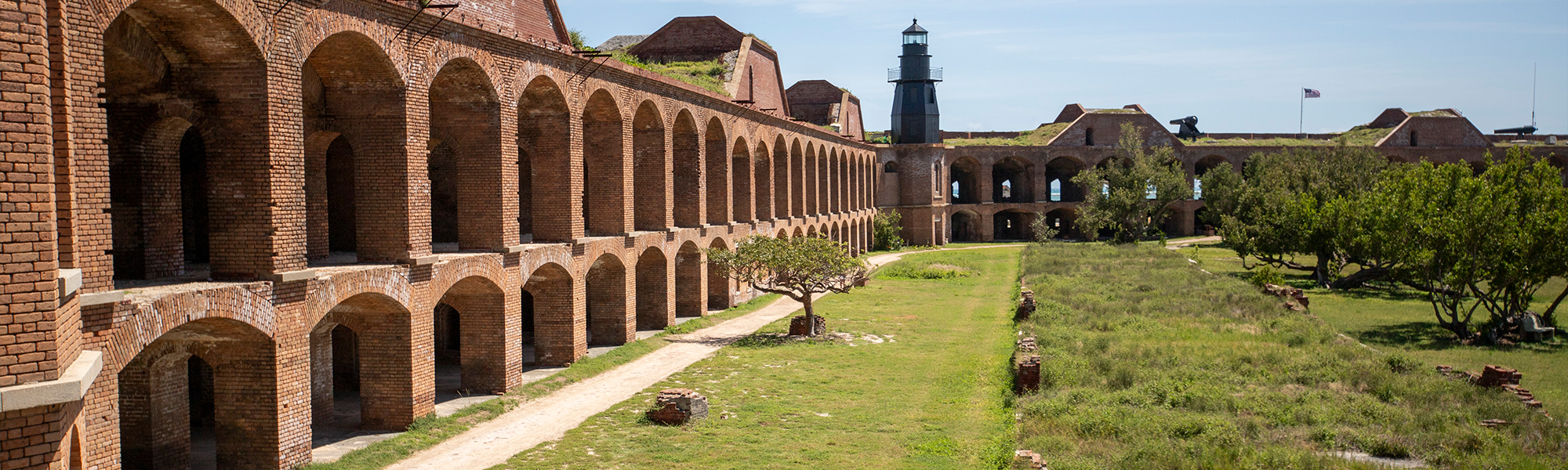
Fort Jefferson—The centerpiece of the park and one of the largest masonry structures in the Americas, Fort Jefferson was built in the mid-1800s to guard the Gulf of Mexico. Its moat, cannons, and brick ramparts are remarkably well-preserved dominating the island of Garden Key. Guided tours reveal its military history and the story of Dr. Samuel Mudd, imprisoned here after the assassination of Abraham Lincoln.

2
Bush Key—A sanctuary for nesting seabirds, including sooty terns, brown noddies, and magnificent frigatebirds, Bush Key teems with life. Plan carefully as this island closes seasonally (February through September) to protect these nesting colonies.

3
Loggerhead Key—Loggerhead Key is the largest island in the park, crowned by the 150-foot Loggerhead Lighthouse built in 1858. The surrounding coral reefs and shipwrecks offer some of the best snorkeling and diving in the Keys, though access requires a private boat.

4
Windjammer Wreck—The 261-foot, three-masted iron-hulled sailing ship sank in 1907 after running aground on a shallow reef near Loggerhead Key. Today, the wreck rests in about 20 feet of clear water, making it easily accessible to snorkelers and divers alike. Coral and sponges have transformed its iron ribs into a thriving reef, home to parrotfish, angelfish, rays, and sea turtles. Exploring the Windjammer is like swimming through living history.
Best time to visit Dry Tortugas National Park
All of Florida’s parks oscillate on a dry-wet season timeline. Winter is the dry season, usually cooler, calmer, and clearer, attracting more crowds than summer’s wet season.
- Winter (November to April): Clear skies, calm seas, and comfortable temperatures (70–80°F) make winter ideal for snorkeling, camping, and photography.
- Summer (May to October): Even though summer is hot, humid, and stormy, with daily showers and occasional hurricanes, the upside is calmer winds, warm water (85–87°F), and peak seabird activity still make Dry Tortugas worth visiting.
How long should I visit Dry Tortugas National Park?
Most visitors take a 1-day trip via ferry or seaplane from Key West, which allows 4–5 hours on Garden Key. But for those wanting to experience the park’s quiet nights, incredible stars, and early-morning solitude, the Garden Key Campground allows the only overnight accommodations in the park. These permits open 6 months in advance one month at a time and sell out almost immediately.
Getting to Dry Tortugas National Park
Dry Tortugas is one of the most difficult parks to reach. The most convenient and direct route is to fly into Key West International Airport (EYW) and book passage to Dry Tortugas from there. However depending on your itinerary, flying into Miami International Airport (MIA) and driving 3 hours down U.S. Route 1 to Key West has proven to be a more scenic and cost-effective option.
Once in Key West, visitors can either fly or sail to Dry Tortugas. Most visitors choose to book a ride on the Yankee Freedom ferry. While this option is typically the slowest route to the park (arriving at Garden Key in 2.25 hours) and allows only 5 hours on the island, it is the most affordable option. Additionally, the ferry allows campers to bring equipment on the ferry. Refer to the website for more details on acceptable gear.
By far, the quickest option to the park is to charter a 40-minute seaplane taxi through Key West Seaplane Charters, the only seaplane service permitted in the park. This service offers half-day and full-day roundtrip tours and does not accommodate campers as gear is too heavy for the plane. While this method is quite expensive, the perk of flying is you have the island practically to yourself before the ferry arrives and after the ferry leaves. Not to mention the aerial views of Fort Jefferson are impressive.
Lastly, some visitors opt to charter or sail a private boat to the island. This can be much more expensive or cumbersome, but allows for the most flexibility in exploring Loggerhead Key and the outlying islands.
Where to stay in Dry Tortugas National Park
Lodging—Understandably so, there are no lodges or hotel accommodations in the park. Most visitors visit Dry Tortugas for a single day and spend the night in Key West or mainland Florida.
Campground—But staying overnight is not out of the question. Garden Key Campground offers a primitive camping experience for those willing to put in the extra effort. Because of its remote location, Garden Key Campground has a list of limitations. As a dry island, there is no drinking water on the key. All campers must pack in their water and pack out all trash. Even though there are only 8 campsites, all campers will be guaranteed a campsite, occupying overflow space if necessary. Campers must check in with ranger staff and pay the campsite fee upon arrival.
- Garden Key Campground—8 sites (tent only), open year-round
When should I book my trip to Dry Tortugas National Park?
When you book your trip largely depends on your itinerary. If you plan to camp, book as early as 6–9 months in advance. If you plan to visit for a single day, the ferry is available as late as 2 weeks in advance, while the seaplane books out 3–6 months in advance. Hotels and rental homes in Key West and mainland Florida are typically available last minute, but the best rates are found 3–6 months prior.
How much should I budget for Dry Tortugas National Park?
A 1 day trip to Dry Tortugas National Park booked 2 months in advance can cost roughly $750 depending on your required needs. Here is a range of what to expect:
| Roundtrip Airfare to Miami International Airport (MIA) | $100–$300 |
| Roundtrip Airfare to Key West International Airport (EYW) | $250–$400 |
| Lodging | $100–$200/night |
| Campsite | $15/night |
| Car Rental | $50–$80/day |
| Meals | $15–$25/meal |
| Yankee Freedom Ferry | $235–$250/person |
| Seaplane Charter | $500–$900/person |
| Entrance Fee | Included in transportation |
Packing list for Dry Tortugas National Park
Each park requires different gear for its unique characteristics. For Dry Tortugas National Park, we wouldn’t want to be caught without snorkel gear, waterproof camera, sandals, towel, water bottle, sunscreen, rain coat, a hat, binoculars, and sunglasses.
Want to learn more? Check out my detailed trip report for a peek into my trip to Dry Tortugas.
For more detailed information on Dry Tortugas National Park, visit the official park website.

Looking for more?
To view more photos of this park and the rest of America’s 63 national parks, check out my ParkQuest project.