Est. 1947 | Florida | 1,508,938 acres
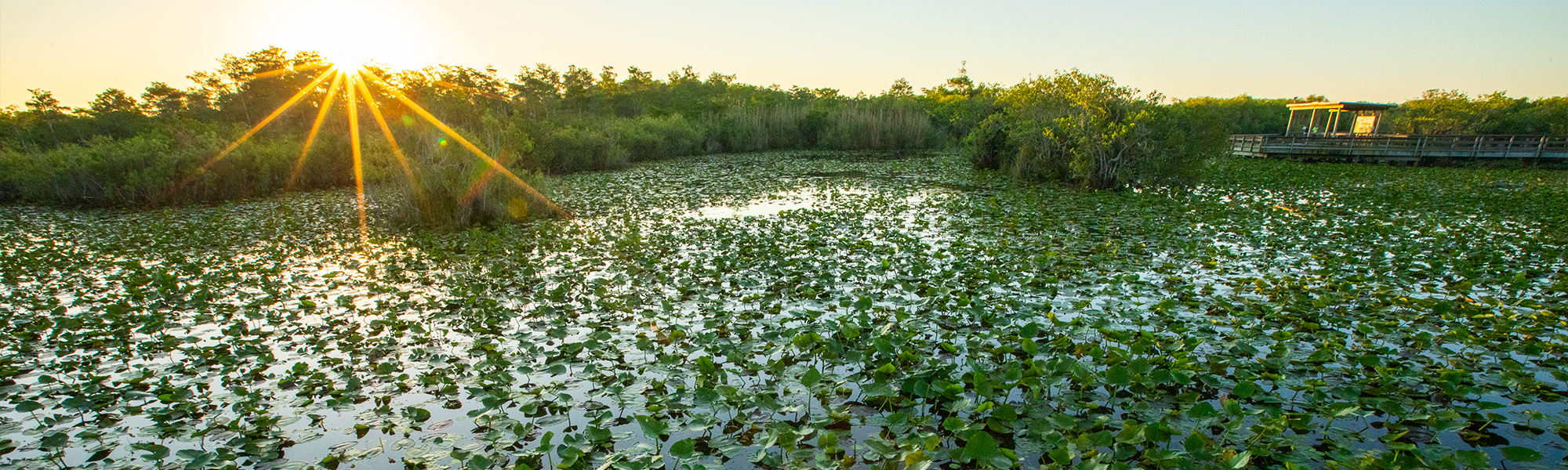
A vast river of grass, Everglades National Park is unlike anywhere else on Earth. Spanning the southern tip of Florida, it protects one of the most unique and biologically rich wetlands in the world—a mosaic of sawgrass prairies, mangrove forests, cypress domes, and coastal estuaries simply teeming with life.
From alligators and manatees to roseate spoonbills and elusive Florida panthers, the Everglades are alive with constant motion and sound year round. The park is both a wilderness and a sanctuary—where the water, light, and wildlife shift endlessly across a landscape that feels both ancient and regenerative.
Everglades is one of the largest national parks in America, yet much of it remains untouched wilderness. The Main Park Road is the only roadway to penetrate the heart of the everglades. Beginning on the eastern border from the Ernest F. Coe Visitor Center, it journeys southwest to Guy Bradley Visitor Center in Flamingo on the very tip of mainland Florida, only traversing half of the park’s landmass. This route services the bulk of the park’s attractions, though the Shark Valley Visitor Center and the Gulf Coast Visitor Center in the north, both off Highway 41, do offer small unique entrances to the massive wetland. Beyond this, Everglades National Park is a boatsman’s paradise, with endless channels, trails and rivers to float.

Must-see highlights in Everglades National Park
1
Shark Valley—Located along the northern boundary, Shark Valley offers some of the best wildlife viewing in the park. A 15-mile loop trail, accessible by tram, bike, or foot, cuts through sawgrass marshes filled with alligators, herons, and egrets. At the far end of the loop, climb the 65-foot Observation Tower for panoramic views of the “River of Grass.”
2
Anhinga Trail—One of the most popular and accessible boardwalks in the park, this half-mile trail near the Ernest F. Coe Visitor Center showcases classic Everglades scenery. Expect close-up views of anhingas, alligators, turtles, and wading birds—especially in winter’s dry season.

3
Mahogany Hammock—A short boardwalk loop leads through a dense subtropical jungle where giant mahogany trees—some centuries old—tower above a lush understory of ferns and air plants. Look for barred owls roosting in the branches above.

4
Hell’s Bay Canoe Trail—This trail is one of Everglades National Park’s most iconic backcountry routes, winding through a labyrinth of mangrove tunnels, sawgrass glades, and hidden ponds in the park’s watery wilderness. Spanning 5.5 miles one way, the route is marked by a series of numbered white poles guiding paddlers through narrow, twisting channels, rewarding those who venture in with remarkable solitude, mirror-still waters, and close encounters with egrets, alligators, and the quiet pulse of the Everglades itself.

5
Flamingo—At the park’s southern tip, the small park village of Flamingo offers sweeping views of Florida Bay and the chance to see American crocodiles, manatees, and roseate spoonbills. Visitors can rent kayaks, launch boats, or stay overnight at the Flamingo Campground or eco-tents.
Best time to visit Everglades National Park
Like the rest of southern Florida, Everglades only has two seasons—wet and dry. The dry season (winter) is most desirable for most visitors, but if lucky enough to avoid seasonal storms the wet season is often quite beautiful with lush green vegetation for endless miles. The choice is yours. You can’t go wrong.
- Winter (November to April): The dry season is the most comfortable and popular time to visit. Warm, sunny days (70–85°F) and cooler nights (50–65°F) make for excellent wildlife viewing as animals congregate around the shrinking water sources. With less water, mosquitoes are minimal.
- Summer (May to October): Hot (highs 85–95°F), humid, and rainy, summer can come with daily thunderstorms and higher water levels. This influx of water is a double edged sword. While it brings vibrancy to the grassland, it also broadens the range of wildlife. Hotter weather slows down summer traffic, meaning quieter trails.
How long should I visit Everglades National Park?
A 3–4 day trip allows enough time to explore multiple areas—Shark Valley, Flamingo, and the Gulf Coast. Consider spending one day in the north visiting Gulf Coast and Shark Valley and the other 2–3 days along Main Park Road in Royal Palm and Flamingo. For in-depth experiences such as multi-day canoe trips or wildlife photography, stay a an extra night or two to explore the park’s varied ecosystems.
Getting to Everglades National Park
Miami International Airport (MIA) is the closest and cheapest airport in the area. Fort Lauderdale-Hollywood International Airport (FLL) is a sensible alternative, but tags on an extra 30 minute commute to the park.
Once in the Miami area, head south on U.S. Route 1 to Florida City. Florida’s Turnpike is generally a quicker method to the park, but is a tollroad requiring payment. From Florida City, turn west on West Palm Drive and at the famous “Robert Is Here” Fruit Stand, turn south onto Highway 9336, also known as Ingraham Highway. Follow this into the Royal Palm section of the park.
To reach the northern entrances to the park, drive north of Florida City on State Highway 997. After nearly 22 miles, turn west on U.S Route 41 and drive some 18 more miles to the Shark Valley Visitor Center. Continue another 43 miles and turn south on State Highway 19 to reach the Gulf Coast Visitor Center.
Where to stay in Everglades National Park
Lodging—There is only one lodge in the park’s boundaries. Newly refurbished in 2023, the Flamingo Lodge in the Flamingo section of the park offers suites and studio rooms equipped with kitchenettes. While this remote lodge is an excellent stay, it does require an extra commute to the main attractions of the park.
- Flamingo Lodge—24 rooms, open year-round
Campground—There are only two campgrounds in the park. Both have well-developed amenities and are managed by a private authorized concessioner.
- Flamingo Campground—178 sites (RV, tent and glamping), open year-round
- Long Pine Campground—108 sites (RV and tent), open November–April
When should I book my trip to Everglades National Park?
Everglades can host multitudes, but it is still best to book campsites and lodging 1–2 months in advance. If all overnight accommodations inside the park are booked, consider a last-minute reservation in the nearby towns of Florida City and Homestead.
Tours, ranger programs and boat rentals are most active in winter and spring, so consider booking early during this timeframe.
How much should I budget for Everglades National Park?
A 2–3 day trip to Everglades National Park booked 2 months in advance can cost roughly $500–$750 depending on your required needs. Here is a range of what to expect:
| Roundtrip Airfare to Miami International Airport (MIA) | $100–$300 |
| Lodging | $100–$400/night |
| Campsite | $30–$40/night |
| Car Rental | $50–$80/day |
| Meals | $15–$25/meal |
| Shark Valley Tram Tour | $34/person |
| Airboat Tour | $50–$75/person |
| Kayak/Canoe Rental | $35–$75/day |
| Entrance Fee | $35/vehicle |
Packing list for Everglades National Park
Each park requires different gear for its unique characteristics. For Everglades National Park, we wouldn’t want to be caught without bug spray, waterproof camera, sandals, towel, water bottle, sunscreen, rain coat, a hat, binoculars, and sunglasses.
Want to learn more? Check out my detailed trip report for a peek into my trip to Everglades.
For more detailed information on Everglades National Park, visit the official park website.

Looking for more?
To view more photos of this park and the rest of America’s 63 national parks, check out my ParkQuest project.