Est. 2018 | Missouri | 91 acres
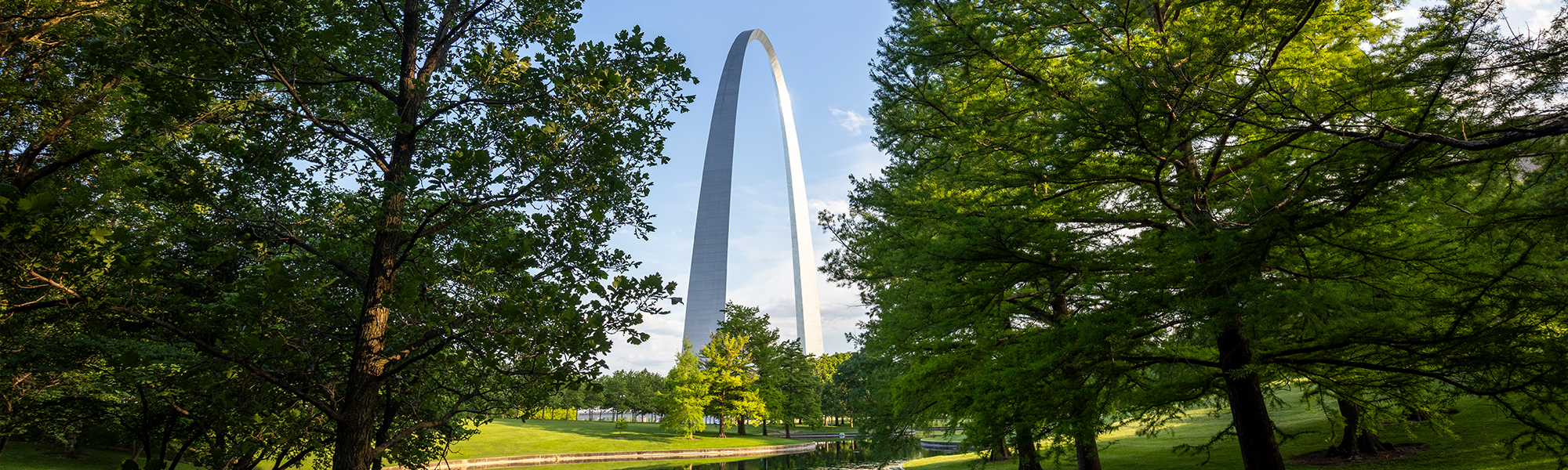
Towering 630 feet above the Mississippi River, the Gateway Arch is the tallest monument in the United States and the striking centerpiece of Gateway Arch National Park. This small but iconic park preserves not only the Arch itself, but also the Old Courthouse and surrounding grounds, honoring the city of St. Louis as the historic “Gateway to the West.”
Originally designated as the Jefferson National Expansion Memorial, the park commemorates key moments in American history—including westward expansion, the Louisiana Purchase, and the Dred Scott case. Though it’s the smallest national park by area, Gateway Arch offers a profound sense of place where architecture, history, and landscape converge in the heart of downtown St. Louis.
Visitors can explore the modern museum beneath the Arch, ride to the top for panoramic city views, stroll the tree-lined park grounds, and walk along the Mississippi Riverfront—all within walking distance of downtown attractions.

Must-see highlights in Gateway Arch National Park
1
Gateway Arch—The stainless-steel Arch rises 630 feet and symbolizes the opening of the American West. Designed by architect Eero Saarinen, it was completed in 1965 and remains a modern engineering marvel. Take a 30-minute Tram Ride to the top and back for unmatched views of St. Louis and the Mississippi River—on clear days, visibility stretches up to 30 miles. But make sure to book a week or two ahead as tickets sell out quickly.
2
The Old Courthouse—One of the oldest standing buildings in St. Louis, the Old Courthouse played a central role in the Dred Scott freedom trial of the 1840s. Guided and self-guided tours are available, though renovation closures may occur—check the official website for updates.
3
Riverfront Trail and Grounds—The redesigned park grounds include walking and biking trails, grassy lawns, and riverfront views. This is a great place for a stroll, picnic, or sunset photo of the Arch with the river below. The Grand Staircase connects the Arch to the waterline, especially striking in the evening golden hour.
4
*Bonus: Mississippi River Overlook—For an added perspective from outside the park, drive over to Malcom Martin Memorial Park on the eastern bank of the Mississippi River. Here, the elevated Mississippi River Overlook platform paints a panoramic scene of the Arch in front of the downtown skyline, an especially striking view at dawn and dusk.
Best time to visit Gateway Arch National Park
Situated right in downtown St. Louis, Gateway Arch is accessible year round, though spring and autumn offer the best conditions to visit.
- Spring (March to May): With mild temperatures (50s–70s°F), blooming trees, and manageable crowds, spring makes a pleasant time to visit. Magnolias and redbud trees blossom in March and April with foliage filled out by May. However, spring has a few setbacks. With the warmer weather, storms and drizzly weather are possible, so pack a light raincoat. Additionally, the Arch is not lit up at night during the month of May to protect bird migration patterns. And finally, spring welcomes baseball season, so check the Cardinals’ schedule to anticipate higher volume of traffic in downtown St. Louis.
- Summer (June to August): Higher temperatures (80s–90s°F) and humidity are typical for summer weather. June and July see the most visitors so expect larger crowds, especially around holidays, so it is wise to book tram tickets early. Take advantage of shaded walks on the grounds or retreat to the air-conditioned museum mid-day. The Arch remains open during inclement weather and only shuts down in the event of a tornado warning (tram ticket refunds are issued).
- Fall (September to November): As families return to school, the park quiets down. Cooler temperatures (60s–70s°F) and fall colors along the park’s tree-lined walkways make autumn an ideal time for photography and sightseeing.
- Winter (December to February): Winter is not all bad in Gateway Arch National Park. Missouri sees the occasional snowstorm, but rarely remains cold for long periods of time. Crowds taper significantly in the chilly air (30s–50s°F) making the park quiet and serene. The museum and tram remain open year-round, though icy conditions may affect walking trails.
How long should I visit Gateway Arch National Park?
A half day is ample time for experiencing the park grounds and visitor center, while a full day allows time for the museum, tram ride, Old Courthouse, and nearby downtown attractions. If interested in history, architecture, and photography, consider spending a full day in the area.
Getting to Gateway Arch National Park
Located in downtown St. Louis, the park is easily accessible by car, air, or public transit. Interstate 44 skirts right past the arch conveniently dropping visitors off in the heart of downtown next to the park. If flying into St. Louis, St. Louis Lambert International Airport (STL), a mere 15 miles from the park, is the best commercial airport offering competitive pricing and convenient flight times. Additionally, the St. Louis MetroLink light rail has a stop at Laclede’s Landing, a short walk from the park.
A word on parking: Downtown parking garages are the closest and most convenient options available. However, if you plan to stay at a downtown hotel, check with the staff for any parking accommodations included with your stay. During our trip, we unnecessarily overpaid for parking because of a miscommunication with the hotel. We used the Stadium East parking garage. It is safe, locked, and spacious. Even during a Cardinals game there were spaces available. However, pay close attention to parking reservations. Reservations through hotels are more flexible and allow in-and-out privileges, whereas reservations through the parking garage cost extra for each exit and reentry. Use the iParkit.com website and app to find and pay for parking in advance near the Arch.
Where to stay in Gateway Arch National Park
There is no camping or lodging within the park, but several hotels are located within walking distance. Hilton St. Louis Downtown (housed in a 19th-century building with modern amenities), Hyatt Regency St. Louis at the Arch (closest to the Arch, ideal for early access), and Drury Plaza Hotel (includes free breakfast and evening snacks) are three of the top hotels in the downtown area.
When should I book my trip to Gateway Arch National Park?
Tram tickets to the top of the Arch sell out quickly during peak travel times (weekends, spring break, summer holidays). Book your tram ride 1–2 weeks in advance through the Gateway Arch website. Lodging downtown also fills quickly during major St. Louis events—book at least a month in advance if visiting during festivals or Cardinals home games.
How much should I budget for Gateway Arch National Park?
Sitting amidst the amenities of downtown St. Louis, Gateway Arch is one of the cheapest parks to visit. A 1 day trip to Gateway Arch booked 1 month in advance can cost under $500 depending on your required needs. Here is a range of what to expect:
| Roundtrip Airfare to St. Louis | $150–$300 |
| Car Rental | $40–$75/day (not including taxes/fees) |
| Parking | $10–$20/day |
| Tram Ride | $15–$19/adult |
| Hotel | $130–$250/night (not including taxes/fees) |
| Meals | $10–$20/meal |
| Entrance Fee | FREE |
Packing list for Gateway Arch National Park
Each park requires different gear for its unique characteristics. For Gateway Arch National Park, we wouldn’t want to be caught without walking shoes, sunscreen, sunglasses, rain coat, and a water bottle.
Want to learn more? Check out our detailed trip report for a peek into our trip to Gateway Arch.
For more detailed information on Gateway Arch National Park, visit the official park website.

Looking for more?
To view more photos of this park and the rest of America’s 63 national parks, check out my ParkQuest project.