Est. 2019 | Indiana | 15,349 acres
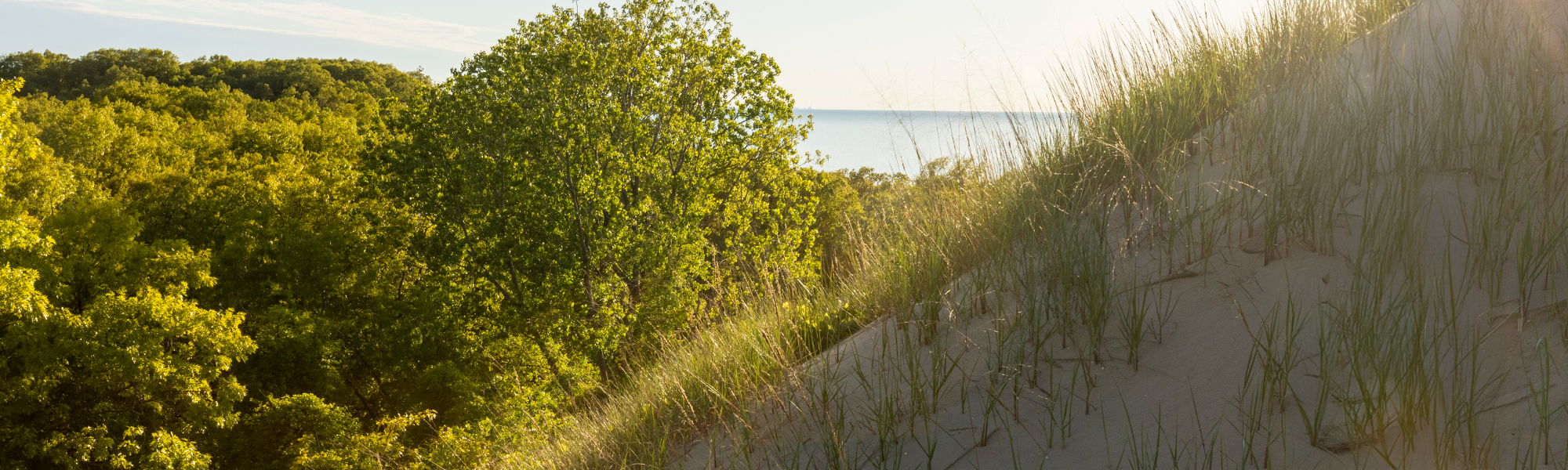
Stretching for 15 miles along the southern shore of Lake Michigan, Indiana Dunes National Park protects a unique landscape where towering sand dunes, wetlands, prairies, rivers, and hardwood forests coexist in an incredibly biodiverse region. This dynamic ecosystem offers more than just a lakeside escape—it’s a haven for over 1,100 plant species and hundreds of migratory birds, earning it a reputation as the birthplace of ecological science in the U.S.
Situated less than an hour from downtown Chicago, Indiana Dunes National Park is one of the most accessible national parks in the country. Despite its proximity to urban centers and industrial shoreline, the park preserves pockets of serenity where visitors can explore windswept dunes, paddle calm rivers, and hike through rare black oak savannas.
U.S. Highway 12, also called the Dunes Highway, runs the length of the park and provides access to beaches, trails, and visitor centers. It intersects with Indiana State Road 49, a major access point near the town of Porter, connecting visitors to both Indiana Dunes National Park and the adjacent Indiana Dunes State Park.

Must-see highlights in Indiana Dunes National Park
1
West Beach—The park’s most developed beach area offers swimming, restrooms, and parking with access to the West Beach Trails, including the Diana Dunes Dare, a short, steep climb to panoramic views of Lake Michigan and the Chicago skyline, and Long Lake, an excellent birdwatching venue. Early mornings are peaceful and great for wildlife viewing, especially during spring migration.
2
Dunes Succession Trail—Located at West Beach, this 0.9-mile interpretive trail illustrates the stages of dune development—from newly forming foredunes to mature oak forest. A stair climb leads to incredible lake views and a deeper understanding of the park’s ecological processes.
3
Great Marsh Trail—A short distance from Dunewood Campground, Great Marsh Trail is a serene 1.3-mile loop through the largest interdunal wetland in the Lake Michigan watershed. This easy, flat trail is a haven for birdwatchers, featuring an accessible observation deck and a diverse array of wildlife, including sandhill cranes, herons, wood ducks, kingfishers, and the occasional osprey.
4
Mount Baldy—This massive, shifting sand dune stands nearly 126 feet tall and is an iconic feature of the park. While direct access to the summit is restricted due to safety concerns, guided ranger tours are available in summer. The nearby Mount Baldy Beach is a beautiful and less crowded spot to relax along the lake.
Best time to visit Indiana Dunes National Park
Situated right in downtown St. Louis, Gateway Arch is accessible year round, though spring and autumn offer the best conditions to visit.
- Spring (April to June): Spring brings wildflowers, migratory birds, and cool temperatures. Trail conditions can be muddy in March and April, but wildlife activity is high. Birding peaks in May, especially during the annual Indiana Dunes Birding Festival. Wild lupines and other wildflowers also peak in May.
- Summer (July to August): Warm weather and water temperatures draw beach crowds. Expect daytime highs in the 80s°F with high humidity. Trails are accessible and facilities are fully operational. Arrive early for beach parking and bring sunscreen and insect repellent as sun and bugs are prevalent. If swimming, be aware of hidden rip currents and know how to escape them.
- Fall (September to October): Crisp air and fall colors arrive by mid-September. Fewer crowds and mild temperatures (60s–70s°F) make this the best season for hiking. Monarch butterflies migrate through in early fall.
- Winter (November to March): Lake-effect snow and quiet trails offer solitude for those prepared for cold temperatures. Some trails remain open for hiking, snowshoeing, and cross-country skiing. Daytime highs often remain in the 30s°F. But even at optimal conditions, facilities may still be limited. Winter also presents the added danger of shelf ice, a layer of ice along the coast that can easily give way and entrap hikers in the freezing lake water.
How long should I visit Indiana Dunes National Park?
Indiana Dunes is not a large park, so a 1–2 day trip is sufficient. A single day allows for hiking a couple of short trails and relaxing on the beach, while two days offer time to explore inland trails, paddle a local river, or visit neighboring attractions like the state park and nearby dunes communities.
Getting to Indiana Dunes National Park
If flying into Indiana Dunes, Chicago is the best option. With two major airports, prices and flights are convenient and rarely canceled. Chicago O’Hare International Airport (ORD) is larger and offers international flights, though tends to be more expensive and sits a bit further away. As a major hub for Southwest Airlines, Chicago Midway International Airport (MDW) is better suited for domestic flights, making it cheaper.
Once in the region, follow Interstate 94 to exit 26B for Porter or Chesterton and follow U.S. 49 north. The visitor center will be on the right as you enter the park boundary. Inside the park, U.S. 49 crosses U.S. Highway 12 which accesses the length of the park east–west.
Where to stay in Indiana Dunes National Park
Lodging—There are no hotels or lodges inside park boundaries. However, nearby towns like Porter, Chesterton, and Michigan City offer a variety of hotels, B&Bs, and vacation rentals.
Campground—Dunewood Campground is the only campground within the national park, but the neighboring Indiana Dunes State Park Campground is an excellent alternative as it is centrally located to the rest of the national park.
- Dunewood Campground—66 sites (RV and tent), open April–October
When should I book my trip to Indiana Dunes National Park?
Summer weekends are busy and campgrounds book quickly, especially during holidays and in July and August. Reserve 1–2 months in advance for peak season stays. Spring and fall offer more availability and mild weather, however keep in mind the campground opens in April and closes in October if you plan to camp.
How much should I budget for Indiana Dunes National Park?
In close proximity to Chicago and other urban centers, Indiana Dunes is not only one of the most accessible parks, but also one of the least expensive. A 1–2 day trip to Indiana Dunes booked 1 month in advance can cost under $500 depending on your required needs. Here is a range of what to expect:
| Roundtrip Airfare to Chicago | $200–$350 |
| Car Rental | $50–$70/day (not including taxes/fees) |
| Dunewood Campground | $25/night |
| Meals | $10–$20/meal |
| Entrance Fee | $25/vehicle |
Packing list for Indiana Dunes National Park
Each park requires different gear for its unique characteristics. For Indiana Dunes National Park, we wouldn’t want to be caught without hiking shoes, beach sandals, sunscreen, sunglasses, swimsuit, towel, bug spray, rain coat, and a water bottle.
Want to learn more? Check out our detailed trip report for a peek into our trip to Indiana Dunes.
For more detailed information on Indiana Dunes National Park, visit the official park website.

Looking for more?
To view more photos of this park and the rest of America’s 63 national parks, check out my ParkQuest project.