Est. 1940 | Michigan | 571,790 acres
Secluded in the upper reaches of Lake Superior, Isle Royale National Park may be the least visited park in the lower 48, but it is notably hailed as the most revisited park in the contiguous U.S. Acclaimed for its pristine lake waters and lush forest, visitors can experience the best of northern Michigan wilderness. Here, moose and wolf live in a secluded balance for survival as each year brings harsh winters and abundant summers. Fish, canoe, hike, or camp your way deep into the heart of this outdoor paradise.
Accessible only by boat or seaplane, the park protects a rugged island archipelago shaped by glaciers and isolated by the seasonal cycles of wind and water. Dense spruce and birch forests cloak the park’s 45-mile rocky spine. Windigo in the west and Rock Harbor in the east are the park’s two main hubs for lodging, information, and resources. These two sites are linked together by a network of trails only. There are no roads on the entire island. To visit Isle Royale is to step away from modern life—into a landscape where wilderness feels immediate and immersive.

Must-see highlights in Isle Royale National Park
1
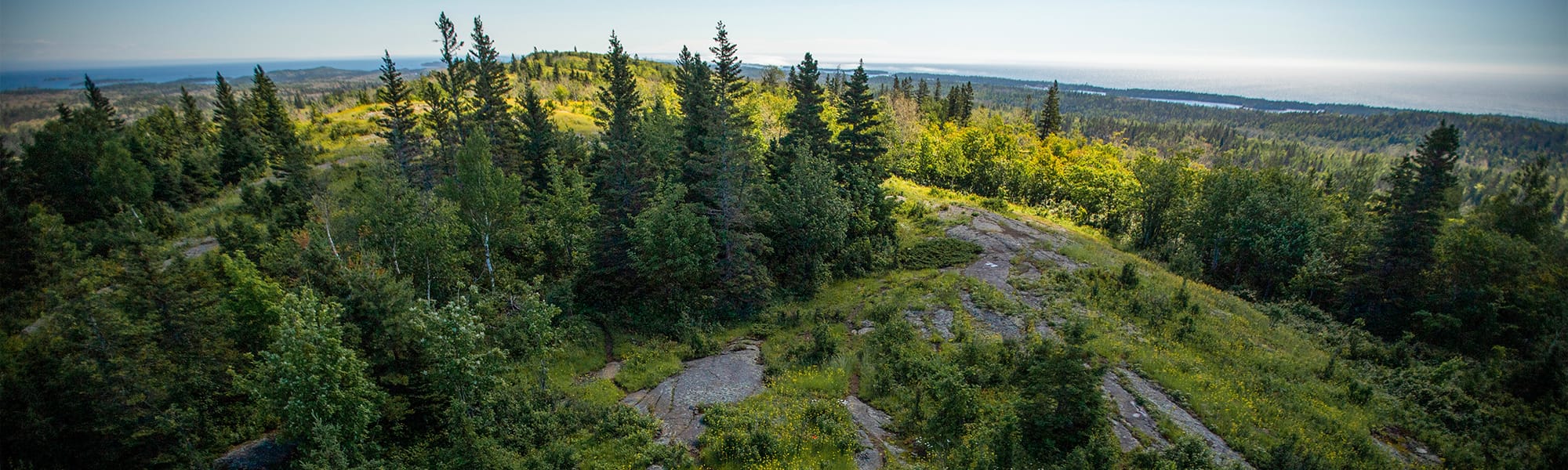
Lookout Louise Trail—The Lookout Louise Trail offers one of the most breathtaking panoramic views in Isle Royale National Park. Reached by boat or water taxi from Tobin Harbor’s Hidden Lake Dock, the 2-mile roundtrip hike climbs steadily through boreal forest and rocky ridges to a dramatic overlook. From Lookout Louise, visitors can gaze across the forested heart of Isle Royale and beyond to the deep blue expanse of Lake Superior and the Canadian shoreline in the distance. It’s a short but rewarding trek that captures the island’s raw northern beauty.

2
Scoville Point Trail—Beginning at Rock Harbor Lodge and following a 4.2-mile loop along the rugged northeastern shoreline of the island. The trail winds through spruce and birch forest, passes ancient rock outcrops carved by glaciers, and opens up to wide views of Lake Superior and the park’s outer islands. Moose are often seen browsing in the coves below, while loons call across the water. The loop’s far end, Scoville Point, offers a breathtaking vantage—an open, wind-swept peninsula that captures the wild, solitary beauty of Isle Royale.

3
Greenstone Ridge Trail—As the park’s premier long-distance route—40 miles from Windigo to Rock Harbor—Greenstone Ridge Trail traverses the island’s forested backbone. Backpackers experience the full sweep of Isle Royale’s terrain: boreal forest, rocky ridges, inland lakes, and sweeping views of Lake Superior.
4
Mount Ojibway—Mount Ojibway rises near the eastern heart of Isle Royale National Park, offering one of the island’s finest inland viewpoints. Reached via the Greenstone Ridge Trail, the summit stands at 1,133 feet, making it one of the highest points on the island. A historic fire tower, still used for observation, crowns the ridge and offers panoramic views across Lake Superior, the surrounding boreal forest, and the island’s rugged interior lakes. On clear days, the horizon seems endless—an unbroken panorama of wilderness that embodies Isle Royale’s remote and untamed spirit.

5
Lane Cove—Lane Cove is a secluded bay on the northeast side of Isle Royale National Park, reached by a 4-mile trail from Rock Harbor that descends steeply through forested ridges to the quiet shoreline of Lake Superior. Sheltered and remote, the Lane Cove Campground offers a handful of primitive sites nestled among spruce and birch, perfect for paddlers or backpackers seeking solitude. Loons, otters, and beavers frequent the cove’s calm waters, and sunsets here reflect in ripples of gold and silver across the lake—a tranquil reward for those who venture off the island’s main routes.
Best time to visit Isle Royale National Park
Because Lake Superior freezes over, the island is not open to visitors November–April, forcing spring to arrive late still clinging to winter. By June and July, the weather warms significantly, though mosquitos are out in full force. Generally speaking, August and September are the best months to visit Isle Royale National Park for weather, temperatures and lack of bugs.
- Spring (April to May): Operations tend to open for the season on April 16, though this spring season can look more like winter. Lake Superior often remains partially frozen or rimmed with shifting ice floes. Temperatures hover between 25°F and 40°F, with lingering snow in the forests and muddy conditions along the ridges.
- Summer (June to August): Summer temperatures range from 45–75°F, with long daylight hours and calm waters ideal for boating, hiking, and kayaking. Mosquitoes peak in June and early July, but can fade by August.
- Fall (September to October): The autumn shoulder months bring fewer visitors, cooler temperatures, and vivid colors—particularly in September, when birch and aspen glow gold against Lake Superior’s steel-blue waves. Be advised, ferries and seaplanes end services in mid-September.
- Winter (November to April): Every winter, Isle Royale closes to the public due to ice and extreme weather. Only researchers and park staff remain during winter seasons.
How long should I visit Isle Royale National Park?
While lodges exist on either end of the park, backpacking is the best way to view the park. A 3–5 day backpack trip offers a good balance of hiking, paddling, and exploring Rock Harbor or Windigo. For a more immersive experience, a 7–10 day trip allows a full traverse of the Greenstone Ridge Trail or multi-lake canoe circuits across the island’s wild interior.
Getting to Isle Royale National Park
Getting to Isle Royale is what makes it one of the least visited parks. Sequestered in the northern waters of Lake Superior, above Michigan’s Upper Peninsula, it is extremely hard to visit. It is important to allow at least 1 day on either end of the trip for traveling to and from the park. Essentially, there are two approaches to the island: ferry and seaplane.
- Ferries: Generally cheaper, though slower, ferries operate from mid-May to September.
- From Michigan: Both Copper Harbor and Houghton on Michigan’s upper peninsula serve as launch points for ferries to Rock Harbor on the eastern end of Isle Royale. Visitors can fly into Houghton County Memorial Airport (CMX) and catch the 6-hour ferry ride on Ranger III. Or an alternative route would be to drive up to Copper Harbor for a shorter 3.5 hour ferry ride on Isle Royale Queen IV.
- From Minnesota: While Minnesota’s coast is closer in distance to the park, the gateway town of Grand Portage, Minnesota, is harder to reach. Visitors can either fly into Canada’s Thunder Bay International Airport (YQT) and cross the U.S.-Canadian border or land in Minneapolis-St. Paul International Airport (MSP) and drive 5 hours to reach Grand Portage. Both the Voyageur II and the Sea Hunter III ferries will transport passengers from Grand Portage to Windigo on the western end of Isle Royale.
- Seaplanes: Seaplanes are the faster, more expensive option for reaching the park. Isle Royale Seaplanes is the only concessionaire offering airfare to Isle Royale National Park mid-May to September. The short 45-minute flight from Houghton can drop visitors off at either end of the park: Windigo or Rock Harbor.
Once on the island, a water taxi to select destinations on the eastern side of the island is available through Rock Harbor Lodge.
Where to stay in Isle Royale National Park
Lodging—There are two hotel-style accommodations available within park boundaries: Rock Harbor Lodge in Rock Harbor and Washington Harbor Camper Cabins in Windigo.
- Rock Harbor Lodge—60 rooms, open June–September
- Washington Harbor Camper Cabins—2 rustic cabins (6 guests each), open June–September
Campgrounds—There are no official front-country campgrounds; however, there are 36 well-developed backcountry campgrounds spread across the island accessible only by trail or watercraft. All sites are first come, first served. There is plenty of room. Permits are required and available on arrival at Rock Harbor or Windigo. Here are a list of the trail-accessible campgrounds. All others are accessible via watercraft only.
- East Chickenbone Campground—9 sites (tent only), open April–October
- West Chickenbone Campground—4 sites (tent only), open April–October
- Chippewa Harbor Campground—7 sites (tent only), open April–October
- Daisy Farm Campground—25 sites (tent only), open April–October
- North Desor Campground—3 sites (tent only), open April–October
- South Lake Desor Campground—10 sites (tent only), open April–October
- Feldtmann Lake Campground—7 sites (tent only), open April–October
- Hatchet Lake Campground—8 sites (tent only), open April–October
- Huginnin Cove Campground—5 sites (tent only), open April–October
- Island Mine Campground—6 sites (tent only), open April–October
- Lake Richie Campground—6 sites (tent only), open April–October
- Lane Cove Campground—5 sites (tent only), open April–October
- Little Todd Campground—4 sites (tent only), open April–October
- Malone Bay Campground—7 sites (tent only), open April–October
- McCargoe Cove Campground—12 sites (tent only), open April–October
- Moskey Basin Campground—10 sites (tent only), open April–October
- Rock Harbor Campground—23 sites (tent only), open April–October
- Siskiwit Bay Campground—9 sites (tent only), open April–October
- Three Mile Campground—15 sites (tent only), open April–October
- Todd Harbor Campground—9 sites (tent only), open April–October
- Washington Creek Campground—19 sites (tent only), open April–October
When should I book my trip to Isle Royale National Park?
Because the visiting season for Isle Royale is relegated to the short summer months, lodging and transit is often competitive, so book as early as possible. Lodging and seaplanes book as early as 1 year in advance. And ferries open reservations in December for the following summer months.
Thankfully, there are plenty of backcountry campsites. Though all are first come, first served, there is no risk of running out of space. Permits are required and issued at Rock Harbor and Windigo. Here, rangers can shuffle campsites around as needed. If campsites at a specific location are full, campers are allowed to double up at sites when needed. The camping atmosphere is calm and accommodating.
How much should I budget for Isle Royale National Park?
A 3–5 day trip to Isle Royale National Park booked 9 months in advance can cost roughly $700–$1,000 depending on your required needs. To keep costs down, consider traveling with a group of family or friends to share the costs of lodging, water taxis, and rental cars. Here is a range of what to expect:
| Roundtrip Airfare to Houghton County Memorial Airport (CMX) | $300–$550 |
| Roundtrip Ferry Fare | $110–$200/person |
| Roundtrip Seaplane Airfare | $396/person |
| Lodging | $400–$500/night |
| Campsite | FREE |
| One-Way Water Taxi | $50–$200/trip |
| Canoe Rental | $30/day |
| Meals | $15–$25/meal |
| Entrance Fee | $7/person per day |
Packing list for Isle Royale National Park
Each park requires different gear for its unique characteristics. For Isle Royale National Park, we wouldn’t want to be caught without bug spray, mosquito head nets, hiking shoes, sandals, water bottle, rain coat, rain pants, hat, and sunglasses.
Want to learn more? Check out my detailed trip report for a peek into my trip to Isle Royale.
For more detailed information on Isle Royale National Park, visit the official park website.

Looking for more?
To view more photos of this park and the rest of America’s 63 national parks, check out my ParkQuest project.