Est. 1994 | Arizona | 92,867 acres
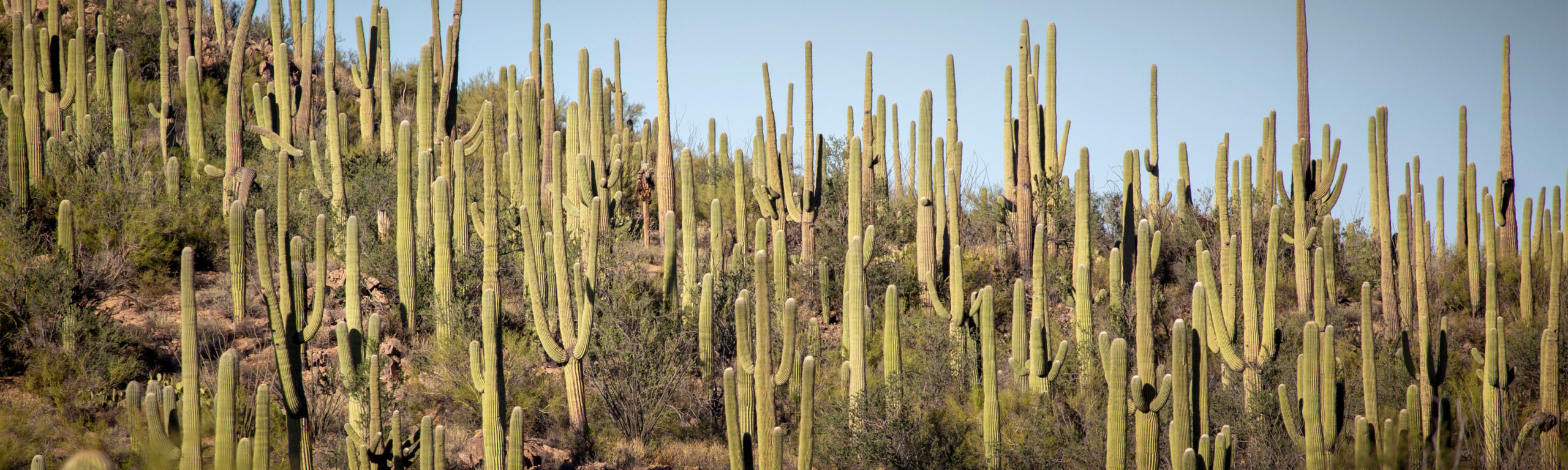
Rising from the Sonoran Desert on either side of Tucson, Saguaro National Park protects a landscape defined by towering saguaro cacti, rugged mountain ranges, and wide desert valleys glowing with warm light. The park is split into two distinct districts—Tucson Mountain District (West) and Rincon Mountain District (East)—that together showcase the full ecological range of the Sonoran Desert, from low desert plains to pine-dotted mountain slopes. In spring, the desert bursts into color with blooming wildflowers, while summer monsoons bring dramatic skies and renewed life. Quiet and rich with desert character, Saguaro National Park offers one of the most iconic Southwestern landscapes in the National Park System.
Saguaro National Park is divided into two noncontiguous districts separated by the city of Tucson. The Tucson Mountain District (West), accessed via Kinney Road, features a compact network of scenic drives and short trails through dense stands of saguaros. The Rincon Mountain District (East) lies at higher elevations and is accessed from Old Spanish Trail, with roads and trails climbing into the Rincon Mountains. Each district has its own visitor center—Red Hills Visitor Center in the west and Rincon Mountain Visitor Center in the east. Unfortunately, there is no direct road connecting the two park units. Visiting both sides requires a drive through Tucson.

Must-see highlights in Saguaro National Park
1
Bajada Loop Drive—Located in the Tucson Mountain District, the Bajada Loop Drive is a 6-mile unpaved scenic bicycle and vehicle route that winds through rolling desert hills thick with saguaros. The drive offers numerous pullouts, trailheads perfect for sweeping views of Avra Valley and distant mountain ranges at sunset.

2
Signal Hill Petroglyphs—A short drive north from Red Hills Visitor Center leads to a small parking lot at Signal Hill, where ancient petroglyphs carved into volcanic rock overlook a forest of saguaros. The site offers both historical context and panoramic desert views of the surrounding land.

3
Cactus Forest Drive—Totaling 8-miles, Cactus Forest Drive in the Rincon Mountain District loops through one of the densest saguaro forests in the park. The paved road provides access to several trailheads and is especially beautiful in early morning or late afternoon light.
4
Wasson Peak—Located in the western district, Wasson Peak is the highest point in the Tucson Mountains, offering expansive views over Tucson, the Santa Catalina Mountains, and the surrounding desert. Several trail routes lead to the summit, ranging from moderate to strenuous.
Wildlife Highlights in Saguaro National Park
Saguaro National Park supports a diverse array of Sonoran Desert wildlife. Common sightings include Gila monsters, desert tortoises, coyotes, javelinas, and black-tailed jackrabbits. Birdlife is abundant, with species such as Gila woodpeckers, curve-billed thrashers, cactus wrens, and elf owls nesting in saguaros. At higher elevations, visitors may encounter white-tailed deer, coatimundis, and seasonal wildflowers that attract pollinators throughout the year.
- Mammals: Coyotes, bats, javelinas, black-tailed jackrabbits, coatis, and ringtails
- Birds: Roadrunners, Harris’s hawks, northern cardinals, gila woodpeckers, cactus wrens, and elf owls nesting in saguaros
- Reptiles: Gila monsters, desert tortoises, horned lizards, and rattlesnakes
- Plants: Saguaro cacti
Best time to visit Saguaro National Park
Depending on your proclivity for heat, Saguaro can actually be a great park to visit year-round. While summers are hot, afternoon showers can cool things down quickly.
- Spring (March to May): Spring is the most popular time to visit, with daytime temperatures typically ranging from the 60s to 80s°F (16–27°C). Wildflowers bloom across the desert, and hiking conditions are excellent.
- Summer (June to September): As temperatures rise in the summer months—often reaching the 90s to low 100s°F (32–38°C), hiking is best in the early morning and evening. Visitors should plan carefully for heat. Beginning in July, summer rainstorms begin gathering in the afternoons cooling the extreme temperatures and reviving the plant life once again. Watch for mild flash floods along low points and washes.
- Fall (October): Fall offers not just cooler weather in the 70s–80s°F (21–29°C) but also fewer crowds, making it the second most popular season to visit after spring.
- Winter (November to March): Winters in the Sonoran Desert are mild and quiet, with daytime temperatures often in the 50s–60s°F (10–18°C). Snow is rare at lower elevations but may dust the higher Rincon Mountains.
How long should I visit Saguaro National Park?
A 2-day visit is ideal for experiencing both the Tucson Mountain and Rincon Mountain districts at a relaxed pace with at least one sunset and sunrise. Most visitors choose to spend one day in the west and one day in the east. However, the Tucson Mountain District holds more views, landmarks, and attractions so expect to spend more time in this western district as you plan the itinerary.
Getting to Saguaro National Park
Saguaro National Park is located in and around Tucson, Arizona. The nearest airport is Tucson International Airport (TUS), located about 30 minutes from both districts. Visitors can also fly into Phoenix Sky Harbor International Airport (PHX), approximately two hours north by car. Each park district is accessed via separate roads, and a personal vehicle is the most practical way to explore the park.
Where to stay in Saguaro National Park
Lodging—There are no hotels inside the park. Most visitors stay in Tucson, which offers a wide range of hotels, resorts, guesthouses, and vacation rentals near both park districts.
Campground—Saguaro National Park does not contain any developed front-country campgrounds, only limited backcountry camping in the far recesses of the Rincon Mountain District. However, outside the park and only 5 miles from the Red Hills Visitor Center, Gilbert Ray Campground acts as the park’s unofficial campground. Managed by Pima Country Parks and Recreation, all sites must be reserved online. There are no first come, first served accommodations.
- Gilbert Ray Campground—138 sites (RV and tent), open year-round
When should I book my trip to Saguaro National Park?
Spring and fall are peak seasons, so lodging in Tucson can fill quickly—especially during festivals and wildflower season. Winter and summer generally offer more availability though less favorable hiking conditions. Typically, a trip to Saguaro can be booked on the spot with extensive city accommodations so close in proximity to the park, but prices tend to rise for last minute plans like these.
How much should I budget for Saguaro National Park?
A 2-day trip to Saguaro National Park booked 1 month in advance can cost roughly $500–$750 depending on your required needs. Here is a range of what to expect:
| Roundtrip Airfare to Tucson International Airport (TUS) | $130–$300 |
| Lodging | $100–$250/night |
| Car Rental | $50–$90/day |
| Meals | $10–$15/meal |
| Entrance Fee | $25/vehicle |
Packing list for Saguaro National Park
Each park requires different gear for its unique characteristics. For Saguaro National Park, we wouldn’t want to be caught without hiking shoes, extra water, sunscreen, a hat, and sunglasses.
Want to learn more? Check out my detailed trip report for a peek into my trip to Saguaro.
For more detailed information on Saguaro National Park, visit the official park website.

Looking for more?
To view more photos of this park and the rest of America’s 63 national parks, check out my ParkQuest project.