Est. 1994 | California | 3,408,395 acres
A land of extremes, Death Valley National Park is the hottest, driest, and lowest national park in the United States—and one of the most hauntingly beautiful. Here, vast salt flats stretch to the horizon, windswept dunes ripple beneath the blazing sun, and serrated mountains rise more than 11,000 feet above the desert floor. Despite its formidable reputation, Death Valley is alive with activity. Alien landscapes, rare wildlife, star-filled night skies, and seasonal transformations continue to attract nearly 1.5 million visitors each year.
With a colorful history of settlers and pioneers, Death Valley is known for its record-setting temperatures and abstract landmarks. Hike below sea level in Badwater Basin, scale the shifting dunes of Mesquite Flat, or discover mysterious sailing stones along Racetrack Playa in this otherworldly playground dominating the California-Nevada border.
To orient yourself, the valley runs north-south covering 3.4 million acres, with as many as seven entrances all converging upon Furnace Creek, a central hub of activity in the midst of the desert valley. Traversing the valley laterally, Highway 190, the traditional route into Death Valley bisects the park stopping at Furnace Creek along the way. Here, the park’s lone visitor center acts as a crossroad for exploring the valley north and south. Catch some of the park’s most popular attractions, including Zabriskie Point, Badwater Basin, Golden Canyon and Artists Drive with a simple drive south down Badwater Road, or search out Mesquite Flat Sand Dunes and Ubehebe Crater up north along Scotty’s Castle Road. As one of the country’s largest national parks, it is impossible to discover everything in a single trip, making Death Valley worth visiting again and again.

Must-see highlights in Death Valley National Park
1
Zabriskie Point—One of Death Valley’s most iconic viewpoints, Zabriskie Point along Highway 190 overlooks a depression of golden badlands sculpted by erosion. It’s especially stunning at sunrise when the soft desert light washes across the ridge of Manly Beacon, a prominent pinnacle in the area.

2
Badwater Basin—At 282 feet below sea level, Badwater Basin is the lowest point in North America. Its vast salt flats, carved into intricate hexagonal patterns, create an otherworldly landscape best explored in the cool morning or evening light. If able, visit Badwater Basin after a storm. Water will collect in the depression creating an endless, shallow mirror-like pool open to hikers, one of the park system’s most incredible spectacles.

3
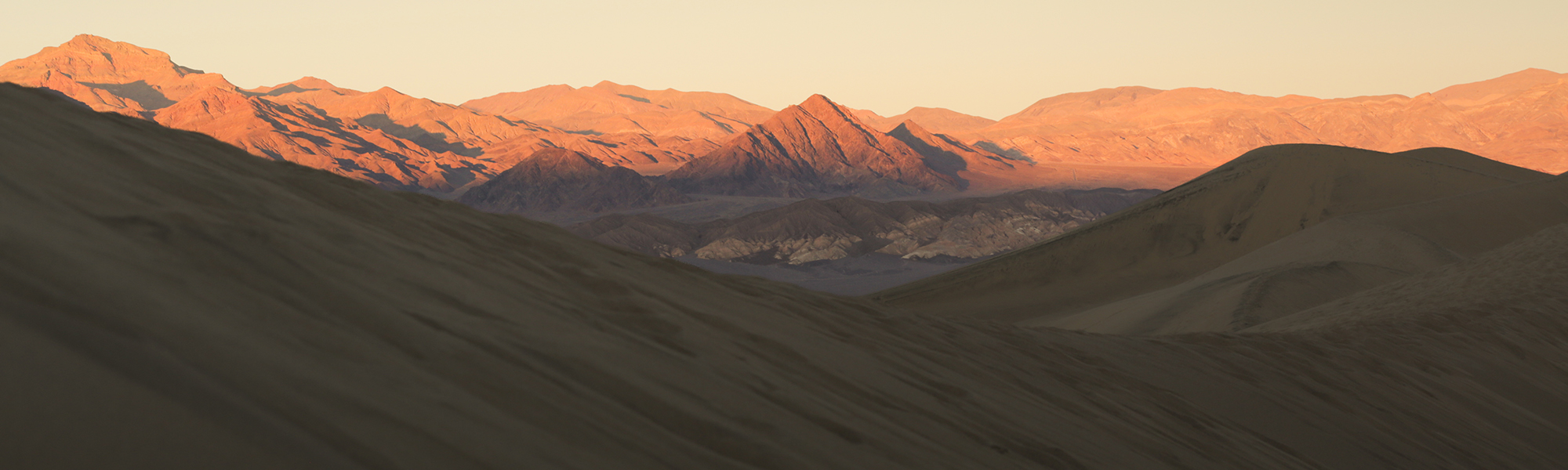
Mesquite Flat Sand Dunes—Located just north of Stovepipe Wells, these graceful dunes rise and fall across the desert floor, with patterns shaped continuously by the wind. Venture out on these sandy ridges during sunrise and sunset to experience dramatic shadows and textures.

4
Artist’s Drive—This scenic one-way road winds through colorful hills, where mineral-rich rock layers create an array of pinks, greens, yellows, and purples. Situated on the western slope, Artist’s Palette is especially vibrant during sunset.
5
Golden Canyon and Gower Gulch Loop Trail—This 4-mile loop is the quintessential Death Valley hike. Travel through bright yellow canyon walls and narrow passageways of erosive badlands while overlooking the Pinamint Range. Interestingly enough, Golden Canyon is the set location for Star Wars: A New Hope.

Wildlife Highlights in Death Valley National Park
As you would expect, wildlife is sparse in Death Valley. However, animals still have a presence in the park. While most bigger mammals keep to the higher elevations in the Pinamint Mountains, you can spot burros and coyotes along the desert floor in the early morning and late evening. The park is also famous for its endemic population of Devil’s Hole pupfish, living in the 93ºF waters of the Amargosa Desert.
- Birds: Roadrunners, ravens, golden eagles, burrowing owls
- Mammals: Coyotes, bighorn sheep, kit foxes, feral burros
- Reptiles: Chuckwallas, side-blotched lizards, gopher snakes
- Fish: Devil’s Hole pupfish
- Flora: Creosote bush, desert holly, salt-tolerant plants, and seasonal wildflowers after winter rains
Best time to visit Death Valley National Park
Death Valley has recorded the hottest temperatures on earth, which means timing your visit is crucial to an enjoyable experience. Generally, avoid summertime altogether and visit between October and April. Because the region is so hot and dry year round, winter months are comfortably warm and consistent in temperature and weather conditions.
- Spring (March to April): Spring is one of the most popular seasons, with daytime highs typically in the 70s to mid-90s°F (21–35°C). Wildflowers bloom after wet winters, and hiking conditions are ideal in the mornings and late afternoons. On rare occasions, the park can experience a superbloom in the spring months, with above average displays of wildflowers explode on the hillsides.
- Summer (May to September): Extreme heat is an understatement for summertime in Death Valley. With temperatures frequently exceeding 110–120°F (43–49°C), this season is best suited for early-morning sightseeing, scenic drives, and stargazing. Travelers should avoid long hikes and always bring plenty of water.
- Fall (October to November): As temperatures relatively cool down, between 70 and 90°F (21–32°C), clear air and softer desert light make this a fantastic time for photography and exploring the park’s major overlooks.
- Winter (December to February): Winter in Death Valley offers mild days, cold nights, and excellent visibility. Daytime highs are usually in the 50s to 70s°F (10–24°C). Snow sometimes dusts the highest peaks, once again adding beauty and contrast to the desert landscape.
How long should I visit Death Valley National Park?
A 2–3 day visit allows you to experience major highlights such as Badwater Basin, Zabriskie Point, Artist’s Drive, and the Mesquite Flat Sand Dunes. Travelers with 4 or more days can venture to remote locations like the Racetrack Playa, explore high-elevation trails along Telescope Peak, or visit the historic towns and mining sites scattered throughout the park’s vast boundaries.
Getting to Death Valley National Park
Most visitors reach Death Valley by car. The park lies about 2 hours from Las Vegas, 4.5 hours from Los Angeles. Several main entrances along Highways 190 and 374 connect to the valley’s central roads.
If flying in from afar, the nearest major airport is Harry Reid International Airport (LAS) in Las Vegas offering the easiest access to the park. Once inside the park, attractions are spread far apart, so a vehicle with good fuel range is essential.
Where to stay in Death Valley National Park
Lodging—Death Valley has 3 lodging locations throughout the park. The Oasis at Death Valley (hosting both an inn and a ranch full of rooms and amenities) is located in Furnace Creek. A step down in price and luxury, Stovepipe Wells Village is found northwest in Stovepipe Wells. And Pinamint Springs Resort in Pinamint Springs offers budget-friendly accommodations for the west end of the park.
- The Oasis at Death Valley (Furnace Creek)—262 hotel-style rooms, 100 cottage-style units, open year-round
- Stovepipe Wells Village—83 hotel-style rooms, open year-round
- Pinamint Springs Resort—14 motel-style rooms, 9 cabins, 1 cottage, open year-round
Campground—Death Valley hosts campgrounds aplenty within its borders: 7 developed campgrounds, 5 primitive campgrounds, and 3 privately-owned campgrounds. Though keep in mind, camping in Death Valley requires extra patience and understanding when braving the heat. Of the developed campgrounds, only Furnace Creek Campground is reservable. All other NPS locations are first come, first served.
- Furnace Creek Campground—136 sites (RV and tent), open October–April
- Texas Springs Campground—106 sites (RV and tent), open October–April
- Sunset Campground—230 sites (RV and tent), open October–April
- Emigrant Campground—10 sites (tent only), open October–April
- Stovepipe Wells Campground—190 sites (RV and tent), open October–April
- Mesquite Spring Campground—40 sites (RV and tent), open year-round
- Wildrose Campground—23 sites (RV and tent), open year-round
- Thorndike Campground (Primitive)—6 sites (RV and tent), open April–December
- Mahogany Flat Campground (Primitive)—9 sites (RV and tent), open April–December
- Eureka Dunes Campground (Primitive)—7 sites (RV and tent), open year-round
- Homestake Campground (Primitive)—10 sites (RV and tent), open year-round
- Saline Valley Campground (Primitive)—15 sites (tent only), open year-round
- Fiddlers Campground (Private)—61 sites (RV and tent), open year-round
- Pinamint Springs Campground (Private)—54 sites (RV and tent), open year-round
- Ohyu RV Park (Private)—14 sites (RV only), open year-round
When should I book my trip to Death Valley National Park?
Consider booking your trip to Death Valley as early as 3 months in advance as campsites and lodging can sell out quickly. Spring and fall are the park’s busiest seasons, and lodging at Furnace Creek often sells out months in advance. Winter weekends can also be popular, especially around holidays. Summer lodging is easier to secure due to extreme heat, but reservations are still recommended for weekends and holiday periods.
How much should I budget for Death Valley National Park?
A 2–3 day trip to Death Valley National Park booked 3 months in advance can cost roughly $500 depending on your required needs. Here is a range of what to expect:
| Roundtrip Airfare to Harry Reid International Airport (LAS) | $100–$300 |
| Lodging | $140–$450/night |
| Campsite | $14–$36/night |
| Car Rental | $50–$70/day |
| Meals | $15–$20/meal |
| Entrance Fee | $30/vehicle |
Packing list for Death Valley National Park
Each park requires different gear for its unique characteristics. For Death Valley National Park, we wouldn’t want to be caught without hiking shoes, extra food and water, binoculars, sunscreen, a hat, and sunglasses.
Want to learn more? Check out my detailed trip report for a peek into my trip to Death Valley.
For more detailed information on Death Valley National Park, visit the official park website.

Looking for more?
To view more photos of this park and the rest of America’s 63 national parks, check out my ParkQuest project.