Est. 1980 | Alaska | 13,175,799 acres
Sprawling across a landmass larger than Switzerland, Yellowstone, and Yosemite combined, Wrangell–St. Elias National Park & Preserve is the largest national park in the United States and a UNESCO World Heritage Site. It is a world of superlatives—home to some of North America’s highest peaks, largest glaciers, and wildest backcountry. Its sheer scale means there’s no single “center” to explore; instead, visitors choose from remote towns, rugged roads, and fly-in adventures. From the ghost town of Kennecott to the tidewater glaciers of Icy Bay, Wrangell–St. Elias offers raw Alaskan wilderness on an epic scale.
The park stretches from the Gulf of Alaska inland to the Yukon border, encompassing vast mountain ranges—the Wrangell, St. Elias, and Chugach—as well as massive icefields, boreal forest, and coastline. Apart from backcountry flights, there are two main entrances into this massive park. Nabesna, accessed from the north, and McCarthy, approaching from the west, are the only attempts to tame and settle the extensive wilderness of Wrangell-St. Elias. Both are reached via long, rough unpaved roads. Connecting these two mountain villages, Glennallen sits just outside the western border acting as the park’s gateway town. The rest of the park is largely untouched and undeveloped, only accessible by bush plane or boat.
Glennallen and McCarthy hold the park’s only two visitor centers, but ranger stations along both the McCarthy Road and the Nabesna Road are open in the summer months. Because of its proximity to Kennecott’s historic copper mill, McCarthy is often the considered the hub of the park literally located in the exact center of Wrangell-St. Elias, though the bumpy, unmaintained 60-mile road requires extra determination and grit to reach it.

Must-see highlights in Wrangell-St. Elias National Park
1
McCarthy Road—For those capable of unpaved travel, the McCarthy Road is an absolute must, penetrating the heart of the park from the border town of Chitina. Keep an eye out for moose, trumpeter swans, bears and more on this backroad safari as you cross historic trestle bridges and wild rivers. Note: While it is always open (even in winter) and generally easy-going, the condition of the McCarthy Road is weather dependent. Large rainstorms create massive potholes and washboard. And as an historic train route, the occasional railroad spike can puncture tires. Many rental companies forbid travel on this road.
2
Root Glacier—Easily accessed from Kennecott via the moderate 5-mile roundtrip Root Glacier Trail, this glacier offers guided or self-led hikes on shimmering blue ice, complete with waterfalls and meltwater pools. Tread carefully though as the ice can be slick and exploring moulins (water-carved crevasses of unknown depths) can be fatal without proper ropes and gear. Consider packing microspikes or hiring a guide with crampons for the best experience. For the more adventurous, schedule an ice climb with a local guide to explore the vertical dimensions of the glacier.
3
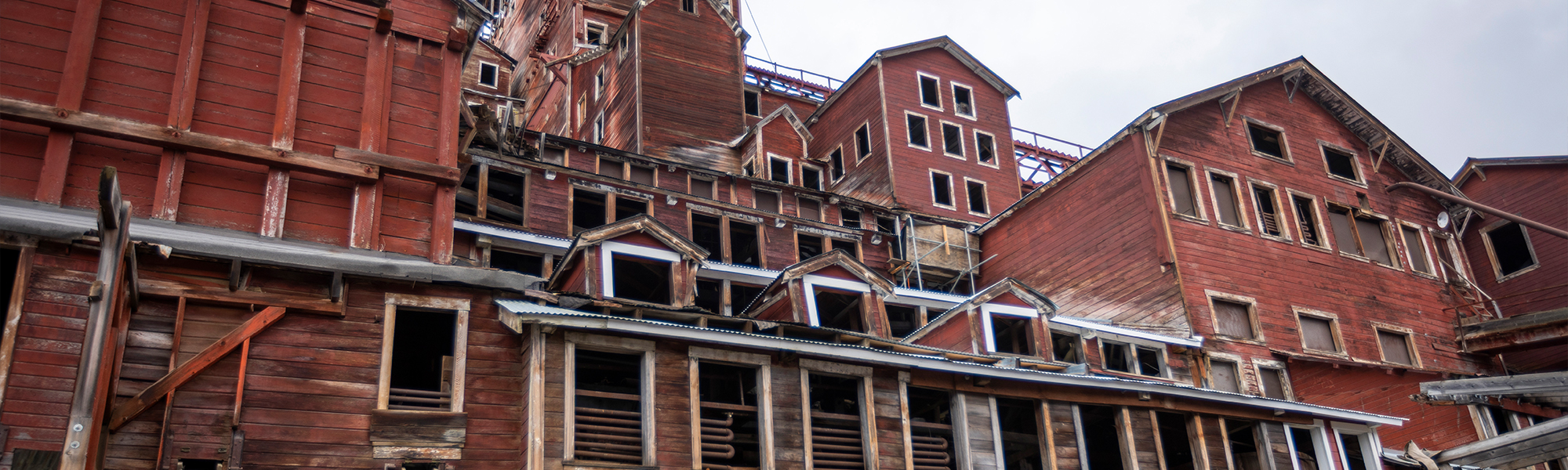
Kennicott Mill—In its heyday, the Kennecott mines produced over $200 million in copper extract (equivalent to $3–4 billion today). Exhausting the mountain of its ore, the mill abruptly closed down in 1938 leaving a well-preserved copper mining town and mill perched deep in the Wrangell Mountains. Today, visitors can walk the ghost town for free or purchase a tour of the 14-story mill building to learn about Alaska’s mining history.
4
Flightseeing Tour—Really, the only way to fully comprehend the immensity of Wrangell-St. Elias is from the air. Book a flight with local bush pilots to sightsee from an aerial perspective. Tours typically follow the Kennicott, Nizina and Chitina rivers up into the Wrangell Mountains. Look over at 16,390-foot Mount Blackburn as you soar above the Kennicott Glacier and traverse alpine passes in a thrilling ride through Alaska’s mountain kingdom.
Best time to visit Wrangell-St. Elias National Park
Just by nature of being an Alaskan park, Wrangell-St. Elias is best visited in the summer months. While the park is open year-round, it is only fully-operational in the summer months. The best conditions for visiting are July and August.
- Spring (May to early-June): As temperatures warm up for summer, snow begins to melt, causing rivers run high. Wildlife tends to emerge in May. Because of thawing snow, McCarthy Road and Nabesna Road open for the season, but can be muddy and in disrepair from breakup on the roadway. Expect slow speeds and rough terrain.
- Summer (mid-June to mid-August): Summer is peak season for tourism. With mild temperatures (50–75°F), long daylight hours (18+ hours), and the best road access the park comes alive. Though crowds are never large, expect more visitors in Kennecott and McCarthy. In the snowmelt, wildflowers bloom in July and die out by August. August is considered the wettest month of the year. Bugs tend to peak in June and July.
- Fall (late-August to September): Autumn in the Wrangells is beautiful—an excellent time to visit. As bugs dissipate by late-August, brilliant fall foliage peaks in the cooler temperatures, though nights do get cold (below freezing possible). Crowds begin to diminish causing some services to close by mid-September.
- Winter (October to April): Winter is defined by extreme cold, heavy snow, and very limited access. Though technically open to residents year-round, McCarthy Road and Nabesna Road close after the first heavy snowfall. For those still willing to brave the conditions, Wrangell becomes a destination for hardy winter sports like skiing and dog mushing.
How long should I visit Wrangell-St. Elias National Park?
A 3–5 day trip allows the enough time to fully explore Kennecott, Root Glacier, and either McCarthy Road or Nabesna Road. Though the days are long, the park is expansive, requiring more time for exploration. Certain activities like hiking Root Glacier or Bonanza Mine require a full day. For deeper exploration, like backpacking and rafting trips, plan at least a week.
Getting to Wrangell-St. Elias National Park
Wrangell-St. Elias is unique to most Alaskan national parks. While the majority of Alaskan parks require a bush plane, Wrangell is accessible by car. From Anchorage, follow Alaska Highway 1 east to Glennallen. From here turn south on Highway Alaska 4. After 31 miles, turn east again on Alaska Highway 10 (Edgerton Highway) and follow this road to the border town of Chitina. At Chitina, AK-10 turns into the McCarthy Road. The first 17 miles are roughly paved. Cross a large trestle bridge over the Kuskulana River and continue for another 43 miles to the road’s end at the Kennicott River.
From Fairbanks, follow Alaska Highway 2 south to Delta Junction. Continue south on AK-4 past Glennallen until you reach AK-10 (Edgerton Highway).
For those not wanting to drive into the park, private airlines offer flights to McCarthy from Glennallen, Anchorage, or Fairbanks. Though more expensive, this option allows an aerial view of the Wrangell Mountains, granting a spectacular perspective on the park. Offering not just charter flights, but sightseeing tours as well, Wrangell Mountain Air is an excellent option for transportation.
Note on McCarthy Road: McCarthy Road is infamous in Alaska for being a rough road. Potholes, washboard, soft shoulders, and the occasional railroad spike give McCarthy Road it’s deadly reputation. For this reason, the majority of rental car companies will forbid driving on this road. However, certain rental car companies do allow passage on McCarthy Road. Alaska 4×4 Rentals and GoNorth are two popular options located in Anchorage and Fairbanks. From my experience, the road is not as dangerous as it sounds. There are no precarious dropoffs, no rock-crawling obstacles, and no sand washes. In fact, the first 17 miles are roughly paved. For most of the summer months, a standard 2WD sedan can traverse this 60-mile dirt road easily. Just watch your speed and keep an eye out for deep potholes, especially as the road worsens in the last mile. Because the speed limit is 35mph and the sights are incredible, allow at least 2.5 hours to reach McCarthy from Chitina. Be sure to fill up your gas tank before you leave. McCarthy does not have a public gas station. The nearest gas station is in Chitina.
Note on McCarthy and Kennecott accessibility: McCarthy and Kennecott are sister towns, only 4 miles apart. However, they are both located on the other side of the Kennicott River. While there is a vehicle bridge spanning the river, it is privately owned and locked, only open to residents and businesses of McCarthy. Do not expect to drive across the Kennicott River. Instead, look for a dirt parking lot for public vehicles (expect a parking fee) with a single footbridge for pedestrians and ATVs at the end of the McCarthy Road. After crossing the river, shuttles run between this footbridge, McCarthy, and Kennecott frequently, but require a one-time payment per person. McCarthy is a short 1-mile walk from the footbridge and Kennecott is 4 miles beyond.
Where to stay in Wrangell-St. Elias National Park
Lodging—Because the park was established after the town of McCarthy and Kennecott, private land is interspersed with park land. While there is no lodging officially in the park, Kennecott and McCarthy have multiple options for indoor overnight accommodations.
- Kennicott Glacier Lodge—(Kennecott) 43 hotel-style rooms, open May–September
- McCarthy Lodge Resort—(McCarthy) 8 hotel-style rooms, 1 house, open May–September
Campground—Kendesnii Campground, along the northern Nabesna Road, is the only established campground within park boundaries. It is available year-round on a first come, first served basis. Other pullouts along Nabesna Road are suitable for camping and boondocking. Privately operated, Base Camp Kennecott is the only campground in McCarthy.
- Kendesnii Campground—10 sites (RV and tent), open year-round
When should I book my trip to Wrangell-St. Elias National Park?
Because Wrangell-St. Elias is not easily accessible, it does not draw huge crowds. However, indoor lodging can be competitive for the summer season. Rooms in Kennecott Glacier Lodge or McCarthy Lodge Resort should be reserved 6–9 months in advance. If lodging is not a concern, or camping is preferred, booking 1 month out is possible.
Activities such as ice climbing, flightseeing, paddling, and mill tours are not competitive. These activities can be booked up to a week (or in some cases a day) in advance. St. Elias Alpine Guides, located in McCarthy is your one-stop shop for outdoor adventures in the Kennecott area.
A Note on Trip Insurance: Remote Alaskan vacations are not only expensive, but also precarious. Inclement weather can delay and cancel plans. Most lodges and flight charters do not reimburse for weather challenges unless they specifically cancel your reservation. Simply put, there are no refunds for no-shows if your flight to Alaska is delayed or canceled. So trip insurance might be a good idea if traveling during inclement weather months or have tight connections. For example, my chartered flight to Lake Clark was almost in jeopardy since my flight to Anchorage was nearly delayed an entire day due to plane maintenance. If you don’t plan to pay for trip insurance, consider building a day of margin into the start and end of your trip to account for any mishaps.
How much should I budget for Wrangell-St. Elias National Park?
Wrangell-St. Elias can be a relatively affordable Alaskan park. A 3–5 day trip booked 9 months in advance can cost roughly $1,500 depending on your required needs. To keep costs down, consider camping overnight or traveling with a group of family or friends to share the costs of lodging, flight charters, and rental cars. Here is a range of what to expect:
| Roundtrip Airfare to Anchorage | $350–$500/person |
| Roundtrip Charter Anchorage to McCarthy | $4,000/plane (2–3 people) |
| Roundtrip Charter Glennallen to McCarthy | $2,000/plane (2–3 people) |
| Lodging (McCarthy) | $245–$425/night |
| Kendesnii Campground (Nabesna) | FREE |
| Base Camp Kennecott (McCarthy) | $35–$45/night |
| Rental Car | $150–$200/day |
| Rental Car (to McCarthy) | $200–$400/day |
| Flightseeing Tour | $320–$520/person |
| Root Glacier Ice Climb | $160–$180/person |
| Paddle Tour | $95–$115/person |
| Kennecott Mill Tour | $17–$34/person |
| Meals | $15–$40/meal |
| Entrance Fee | FREE |
Packing list for Wrangell-St. Elias National Park
Each park requires different gear for its unique characteristics. For Wrangell-St. Elias National Park, we wouldn’t want to be caught without hiking shoes, microspikes, a water bottle, warm layers, bug spray, rain coat, a hat, binoculars, and sunglasses.
Want to learn more? Check out my detailed trip report for a peek into my trip to Wrangell-St. Elias.
For more detailed information on Wrangell-St. Elias National Park, visit the official park website.

Looking for more?
To view more photos of this park and the rest of America’s 63 national parks, check out my ParkQuest project.