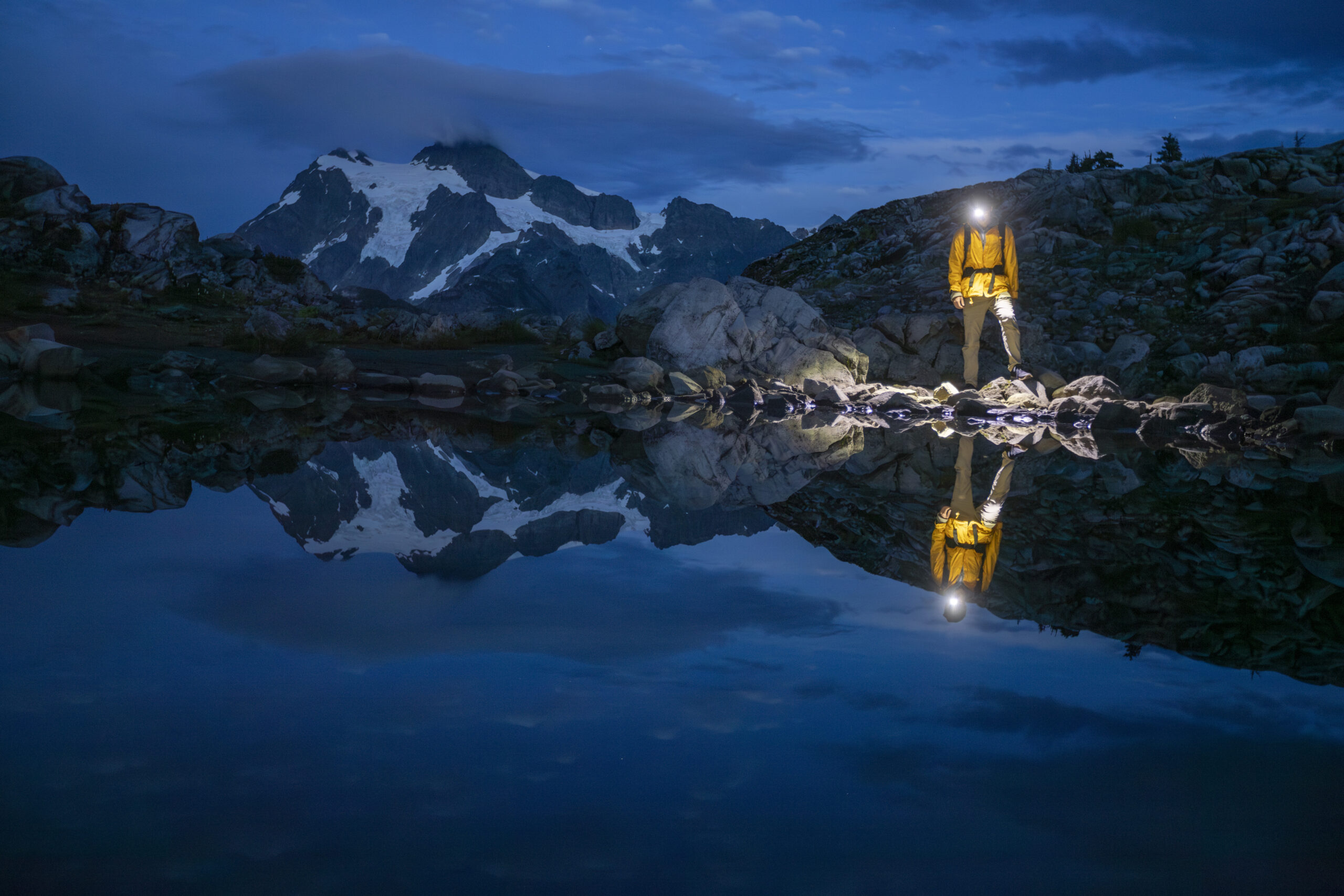
Normally, the sun is my best friend for landscape photography, but on this trip the moon gets my vote for MVP.
March 1–3, 2026
This year’s total lunar eclipse draws me back to Saguaro National Park for the best chance of clear skies, warm nights and hopefully a blood moon—so called for the red hue it dons in the totality of earth’s shadow. To my surprise, lunar eclipses are far more common than I anticipated. I had assumed they occur only once every decade or so. Turns out a lunar eclipse aligns about once every three years and sometimes as frequent as several times a year, roughly six months apart. For a list of future lunar eclipses visit this site.
Eager to photograph this phenomenon, I drive down to Tucson, Arizona, the gateway to Saguaro National Park. After an 11 hour drive I pull into the Signal Hill parking lot just in time for sunset over the Red Hills cactus forest. Spires of saguaros, some 50–60 feet tall catch the westering light in their individual needles setting the desert valley ablaze.
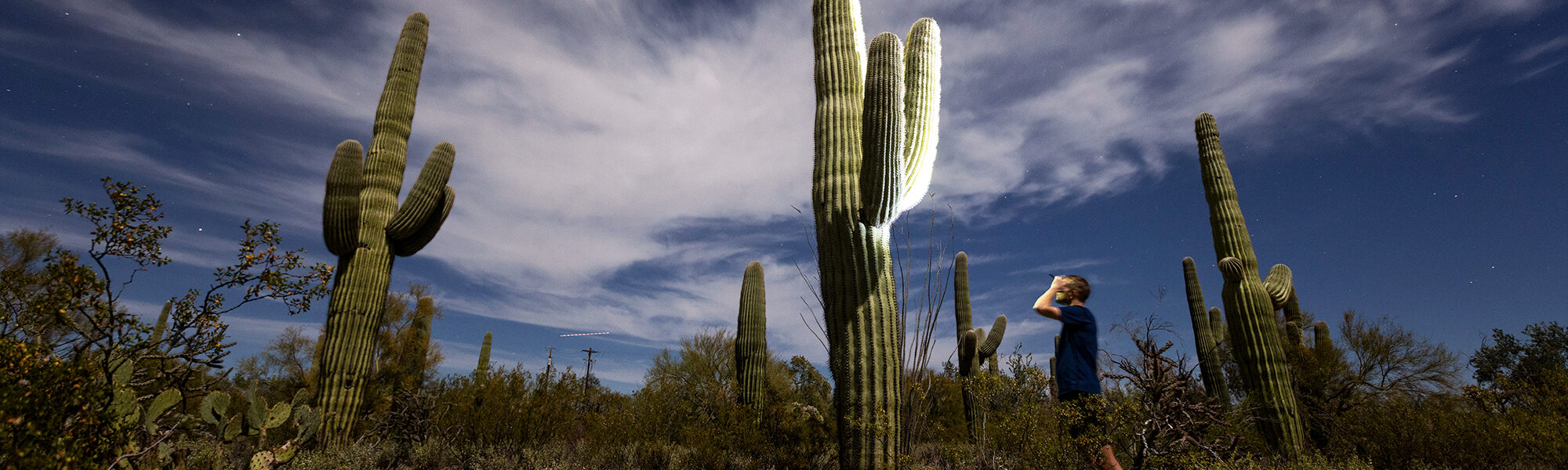
With a warm night ahead, I drive several miles south to Gilbert Ray Campground to set up camp and practice my night photography for the lunar eclipse tomorrow night. The nearly full moon is exceptionally bright tonight, making the tent easy to build but obscuring the desert stars in a blue night sky.
Thin wisps of clouds soar high along the jet stream further brightening the nightscape. Armed with a tripod and my camera, I wander around the outskirts of the campground for an hour or so testing out different shutter settings and compositions for the perfect photo. As the night settles in, so do I knowing full well an early morning sunrise hike awaits me.

To escape the heat and make the most of the sunrise, I drive to King Canyon Trailhead at well before sunrise. Starting at 5:30 a.m., I begin hiking along King Canyon Trail up Wasson Peak, the tallest point in the western district. The moon illuminates the trail making headlamps almost unnecessary. As I near the summit ridge, the sun breaks the horizon, casting warm rays over nearby Tucson and the surrounding mountains. The top of Wasson Peak offers 360º views and a warm breeze from across the desert. Enjoying the rest, I linger for a little bit before making my way back down to the car.
On the way down, I opt to make of loop of my route and descend along Hugh Norris Trail and Sendero Esperanza Trail for a change of scenery. There also appears to be more shade this direction. Finishing the loop at over 8 miles, I return to the car hot and dusty. It’s only March but the late morning has already reached 80ºF, pushing 90. I guzzle cold water from the cooler in my trunk and drive over to Red Hills Visitor Center to cool off in the air conditioned building before returning to camp for lunch and an early afternoon nap.

Waking up around 3 p.m., I drive an hour east across Tucson to the Rincon Mountain District. Since this half of the park faces west, it offers many natural viewpoints for sunset. A quick stop in the visitor center and I’m out along the 8-mile Cactus Forest Loop Drive searching for compelling scenes for sunset. Near the end, I hop out at Javalina Rocks, a short loop trail through a large rock outcropping, a perfect sunset spot.
As the sun dips low, the high strands of clouds catch the colors—bright orange almost neon against the deep blue sky. The sun once again sparks every single cactus with a flash of gold in a final farewell before the land slips into shadow. Ecstatic with my shots, I drive back to camp ready for an early bedtime.

It’s 3:00 a.m. and my alarm beeps me awake. Normally, I’m groggy and bleary-eyed, but tonight I jump out of the tent to examine the moon. It has just begun the partial phase where the earth starts to cover the moon in shadow. The peak of the eclipse, when the moon appears red, is about an from now.
I gather my gear and drive back to Signal Hill away from light pollution and crowds. Here I find a quiet spot framing a saguaro perfectly in the path of the moon. As I set up my tripod and establish my camera settings the moon slowly fades darker and darker. Eventually, only a sliver of white light is left on the face of the moon. Now fully in shadow, the darkened moon takes on its eerie red glow. I have about an hour to take as many photos as I can before the totality passes and the moon returns to a partial phase.


I whip out my telephoto lens switching between wide-angle and zoomed-in compositions. I frantically adjust settings here and there to get the perfect exposure, knowing time is precious. As the lunar eclipse draws to a close, I breathe a sigh of relief content with the photos I captured. Success at last. Basking in the last hour before sunrise, I watch constellations wheel overhead.

In one last hurrah before heading home, I wait for the sun at Signal Hill, this time watching it rise in the east instead of set in the west. Sunrise in the desert is pure inspiration. Clear bright light from a new day gives golden hour its reputation as hundreds of cacti sparkle in the valley below. The cool shadows creep away before the sun’s warm glow. But I am busy photographing out west as I watch the moon quietly sink below the horizon waving goodbye. Normally, the sun is my best friend for landscape photography, but on this trip the moon gets my vote for MVP.

Looking for more?
To view more photos of this park and the rest of America’s 63 national parks, check out my Park Portraits project.